

Posted by Jamie Sinclair
on November 01, 2026

Last updated: 1 November 2026. Written by Jamie Sinclair, who writes about canine health, nutrition, and everyday care for Doggy Dailies - focused on translating veterinary research and real ingredient science into practical, honest guidance UK dog owners can use. Products vet-formulated with input from Lourdes María Arnedo Amat, veterinary graduate.
To express a dog's anal glands, gentle pressure is applied to two small sacs at 4 and 8 o'clock around the bottom, from outside or with a gloved finger inside. Most dogs never need it. UK vets advise against routine expressing, so only learn to do it at home after your vet or vet nurse has shown you how.
If your dog keeps scooting or licking their bottom, it's natural to wonder whether you can sort it yourself. This guide covers what expressing involves, when it's safe and what it costs in the UK. It also shows how to support natural emptying with fibre, a healthy weight and our Gland-EZe Anal Gland Chews.
Table of Contents
- What Are Anal Glands and Where Are They?
- What Are the Signs Your Dog's Glands Need Emptying?
- Should You Express Your Dog's Glands at Home?
- How Are Dog Anal Glands Expressed?
- When Should You Never Try It Yourself?
- Home vs Groomer vs Vet: Who Does It and What Does It Cost in the UK?
- How Often Should a Dog's Glands Be Expressed?
- Which Breeds Are Most Prone to Anal Gland Problems?
- How Can You Support Natural Emptying?
- Daily Support: Gland-EZe Anal Gland Chews
- FAQ
- Sources
What Are Anal Glands and Where Are They?
Anal glands, more accurately called anal sacs, are two small pouches just inside your dog's bottom. If you imagine the anus as a clock face, they sit at roughly 4 o'clock and 8 o'clock.
A healthy sac is about 1cm across and feels soft, according to the University of Bristol vet school's clinical skills guide (University of Bristol).
The sacs hold a strong-smelling, oily fluid that acts like a scent signature for other dogs. Normally, a firm poo presses on them as it passes, and a little fluid is squeezed out naturally. Problems start when that doesn't happen.
What Are the Signs Your Dog's Glands Need Emptying?
The PDSA and The Kennel Club list the same tell-tale signs. Watch for:
- Scooting: dragging their bottom along the floor or carpet.
- Licking or nibbling around the bottom or lower back.
- A fishy smell, sometimes on bedding or where they've been sitting.
- Pain when pooing, or flinching when their back end is touched.
- Thick, brown or grey fluid, which The Kennel Club notes is typical of impacted glands.
Scooting has other causes too, such as worms and allergies. Our guide to why dogs scoot covers them. And if the smell is the main clue, read why your dog smells like fish.
Should You Express Your Dog's Glands at Home?
Here's the honest answer: usually not, unless your vet has said your dog needs it and shown you how. UK vet charities are clear on this.
The PDSA says glands don't need checking or emptying in a dog that has never had symptoms. It adds that expressing "could even cause problems if done in the wrong way or too frequently" (PDSA).
The Kennel Club goes further. It notes that not all dog experts agree the glands should be touched at all. It also warns that pressing on an impacted or infected sac could cause it to rupture (The Kennel Club).
Why the caution? Squeezing healthy glands can irritate delicate tissue. Many vets also feel regular emptying can leave the sacs relying on outside help.
That said, some dogs genuinely do need regular help. Medivet says that if your dog needs frequent expressing, a vet may show you how to do it at home (Medivet). That demonstration is the safe starting point.
How Are Dog Anal Glands Expressed?
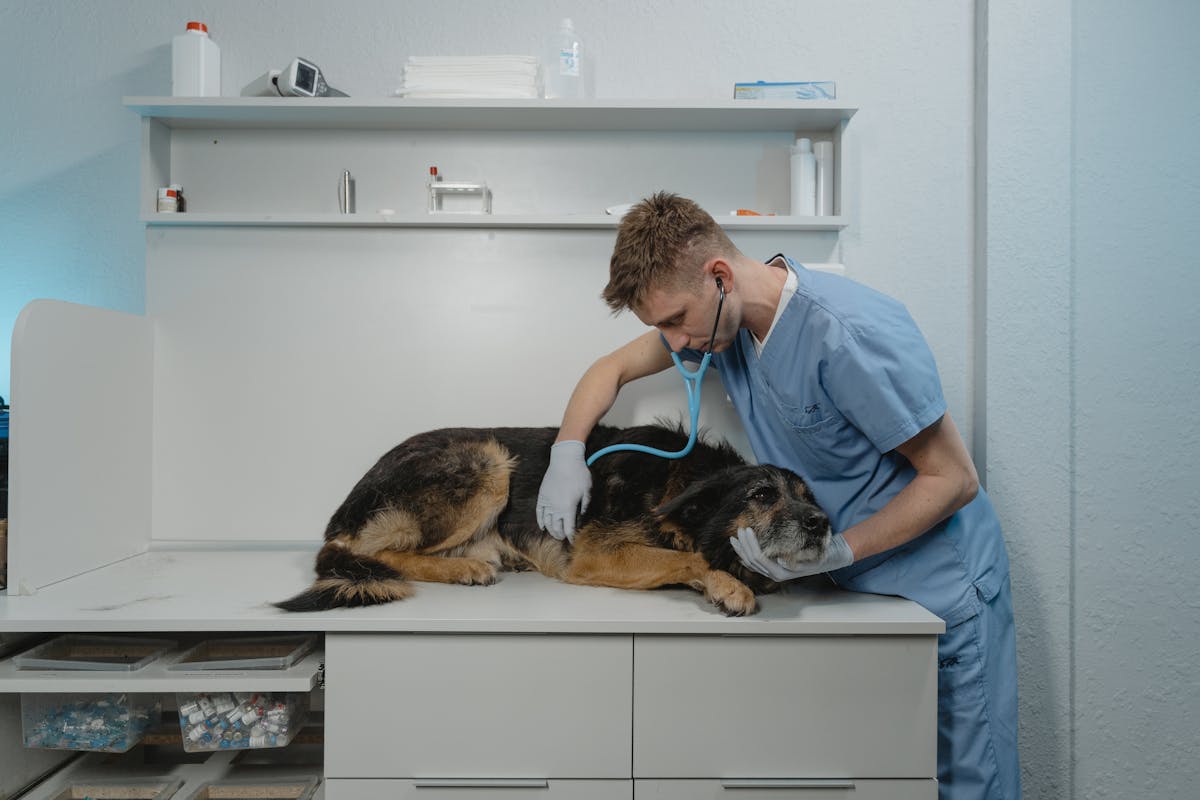
There are two methods. This is a general overview so you know what to expect, not a substitute for a hands-on lesson. Ask your vet or vet nurse to demonstrate first, then do it under their guidance.
Before you start
- Gloves: disposable gloves, plus plenty of kitchen roll or gauze to catch the fluid.
- Lubricant: a water-based lubricant or petroleum jelly on your gloved finger.
- A second person: a calm helper to hold and reassure your dog.
- Patience: keep it short, and reward your dog afterwards.
The external method
With the tail gently lifted, the thumb and forefinger are placed either side of the bottom, at 4 and 8 o'clock. Gentle pressure is applied inwards and towards the opening, with kitchen roll held over the area to catch the fluid.
It's the gentler method, but it doesn't always empty the sacs fully, especially when the fluid has thickened.
The internal method
This is the method vets usually use. A lubricated, gloved index finger goes just inside the bottom, and each sac is gently pressed between that finger and the thumb outside. The sac is "milked" towards the opening.
The Bristol guide recommends a helper to hold the dog, and a muzzle if needed. It also suggests standing slightly to one side to avoid being sprayed. Normal fluid usually comes out easily with little pressure.
The golden rule: stop if it hurts
If your dog cries, struggles, turns to snap or nothing comes out with light pressure, stop. Forcing it can bruise or rupture the sac. A painful gland needs a vet, not more squeezing.
When Should You Never Try It Yourself?
Don't attempt to express your dog's glands at home, and book a vet appointment promptly, if you notice any of these:
- Swelling, redness or a hard lump on either side of the bottom.
- Blood in the fluid or around the area.
- Pus, or thick yellow or green discharge.
- Obvious pain, or your dog won't let you touch the area.
- An open wound or a draining hole beside the bottom, which can mean a burst abscess.
- Straining to poo, being off their food, or seeming generally unwell.
These can signal impaction, infection or an abscess. A UK study found antimicrobials were prescribed in about one in five anal sac cases, so this is a vet job (O'Neill et al., 2021).
Home vs Groomer vs Vet: Who Does It and What Does It Cost in the UK?
Here's how the three options compare. The prices are examples from published UK price lists, checked in November 2026. Prices vary widely by area and practice, so always ask your own vet or groomer.
| Option | Who does it | Usual method | Typical UK cost | Best for |
|---|---|---|---|---|
| At home | You, after a vet or vet nurse demonstration | External or internal, gently | Cost of gloves and lubricant | Dogs your vet has confirmed need regular help |
| Groomer | Your groomer, often during a groom | Usually external only | Varies, ask your groomer. One UK grooming price list shows £10 as an add-on | Only if your vet has advised it |
| Vet practice | Often a registered veterinary nurse (RVN) | Usually internal | Varies, ask your practice. Published examples: £15.50–£24.50, £25.06, £30, £35 and £38 | Routine emptying for dogs that need it |
| Vet | A vet surgeon | Internal, plus a full check | Consultation fee, £40–£75 on the price lists we checked, plus any medicines | Swelling, pain, blood, pus or a first-time problem |
Price sources (examples, checked November 2026):
- University of Liverpool Veterinary Practice (expression £15.50–£24.50, consultation £40)
- Village Vet (nurse expression £38, consultation £75)
- Abbey Vet Centre, Grimsby (expression £25.06, consultation £49.38)
- RVC Beaumont Sainsbury Animal Hospital, London (nurse consultation including anal gland expression £30, vet consultation £58, fees from 1 April 2026)
- Blythwood Vets (expression £35, consultation £62)
- USPCA grooming price guide (external anal glands £10)
It's worth asking what's included. At the RVC's Beaumont Sainsbury Animal Hospital, for example, a £30 nurse consultation covers anal gland expression and nail clipping.
A tip for UK owners: the CMA's draft indicative price list for vets includes "anal gland expression" as a standard line item. As practices publish clearer price lists, it should get easier to compare costs locally (CMA).
How Often Should a Dog's Glands Be Expressed?
For most dogs, the answer is never. Healthy glands empty themselves every time your dog does a firm poo.
For dogs that do need help, there's no single schedule. Medivet says it could be "as little as once a year or as often as every few weeks". In the AKC's guide, vet Dr Jolee Stegemoller says dogs with gland issues are often expressed every 4–8 weeks (AKC).
Go by your dog's signs, not the calendar. If your dog is comfortable, isn't scooting and has no fishy smell, leave the glands alone.
Which Breeds Are Most Prone to Anal Gland Problems?
The biggest UK study on this comes from the Royal Veterinary College's VetCompass programme. It looked at 104,212 dogs across 110 UK vet practices and found that 4.4% had an anal sac problem in a single year.
Compared with crossbreeds, six breeds had higher odds:
- Cavalier King Charles Spaniel
- King Charles Spaniel
- Cockapoo
- Shih Tzu
- Bichon Frise
- Cocker Spaniel
Flat-faced breeds had 2.6 times the odds of long-nosed breeds. Labradors, Border Collies, Staffies, Lurchers, German Shepherds and Boxers had lower odds (O'Neill et al., 2021, Veterinary Record).
How Can You Support Natural Emptying?
The best way to need expressing less often is to help your dog's glands do their own job.
1. Firm, well-formed poos
The PDSA explains that loose stools often don't press on the glands hard enough to empty them. The Kennel Club notes that glands most often fill up after a few days of diarrhoea. Firm, bulky poos give the sacs a natural squeeze.
2. The right fibre
Adding fibre can help firm up stools. Try a higher-fibre food, a spoonful of plain cooked pumpkin or a fibre supplement, introduced gradually over a week. Our best diet for dogs with anal gland issues guide goes into detail.
3. A healthy weight
The PDSA says overweight dogs are more prone to anal gland problems, because of weaker muscles around the bottom. Regular walks and measured meals help.
For the bigger picture, including allergies and when to worry, see our hub on anal gland health for dogs.
Daily Support: Gland-EZe Anal Gland Chews

Doggy Dailies Gland-EZe is a vet-formulated, heart-shaped soft chew in a liver and beef flavour. It's designed to support firm stools and natural anal gland emptying, so your dog may need less outside help. It's the new name for our No Scoot chews.
- Fibre: pumpkin powder 460mg and VitaFiber prebiotic 250mg per chew.
- Gut support: Bacillus coagulans (1 billion CFU) and Bacillus subtilis DE111 (500 million CFU), plus a five-enzyme blend.
- Also includes: apple cider vinegar, Cran-Max cranberry and quercetin.
- How many chews: up to 12kg, ½ a chew a day; 12–23kg, 1; 23–45kg, 2; over 45kg, 3.
- Loved by owners: rated 4.7 stars from 70 reviews, with free UK delivery.
A supplement supports healthy glands, but it isn't a replacement for a vet when something's wrong. If you're comparing options, our guide to the best anal gland supplement for dogs in the UK lays them side by side.
Shop Gland-EZe Anal Gland Chews
FAQ
Can I express my dog's anal glands at home?
You can, but only if your vet has confirmed your dog needs it and a vet or vet nurse has shown you how. The PDSA advises never trying it without vet instruction, and most dogs never need it.
How much does it cost to express dog glands in the UK?
It varies by practice. Five published UK vet price lists we checked in November 2026 show anal gland expression from £15.50 to £38, and four of the five charge £25 or more. One groomer lists it at £10 as an add-on. A full vet consultation costs more, so ask your practice.
How often should a dog's glands be expressed?
Most dogs never need it, because a firm poo empties the glands naturally. Dogs with recurring problems may need help anywhere from every few weeks to once a year. Let your vet set the timing.
Is it bad to express a dog's glands too often?
It can be. The PDSA says expressing could cause problems if done wrongly or too often. Squeezing healthy glands can irritate the tissue, so only express them when your dog shows signs or your vet advises it.
Should my groomer express my dog's anal glands?
Not unless your vet has recommended it. Groomers usually use the external method, which may not empty the glands fully. If your dog shows pain, swelling or blood, see a vet instead.
How can I help my dog's glands empty naturally?
Aim for firm, well-formed poos with enough fibre in the diet, and keep your dog at a healthy weight. A daily fibre and probiotic chew, such as Gland-EZe, may help support natural emptying.
Sources
- O'Neill DG et al. (2021). Non-neoplastic anal sac disorders in UK dogs: epidemiology and management aspects of a research-neglected syndrome. Veterinary Record.
- PDSA: Blocked anal glands in dogs
- The Kennel Club: Anal gland impaction
- University of Bristol Veterinary School: Expressing canine anal glands (clinical skills guide)
- Medivet: Gland expression
- American Kennel Club: How to express dog anal glands at home
- University of Liverpool Veterinary Practice: Price list
- Village Vet: Prices
- Abbey Vet Centre, Grimsby: Prices for routine care
- RVC Beaumont Sainsbury Animal Hospital: General practice price list
- Blythwood Vets: Procedures pricing
- USPCA: Grooming price guide
- Competition and Markets Authority: Draft indicative price list (vets market investigation)
Ready to support your dog's comfort every day? Give your dog daily fibre and gut support with Gland-EZe Anal Gland Chews, trusted by 100,000+ UK dog owners, with free UK delivery. Your dog's bottom will thank you!
This article is for general information only and isn't a substitute for veterinary advice. Always ask your vet before expressing your dog's anal glands, and see your vet promptly if you notice swelling, blood, pus or pain. Prices are examples checked in November 2026 and may change.
