

Posted by Jamie Sinclair
on November 01, 2026

Written by Jamie Sinclair, who writes about canine health, nutrition, and everyday care for Doggy Dailies - focused on translating veterinary research and real ingredient science into practical, honest guidance UK dog owners can use. Products vet-formulated with input from Lourdes María Arnedo Amat, veterinary graduate.
Last updated: 1 November 2026
The best anal gland supplement for dogs in the UK is one built on real fibre, like pumpkin, psyllium or beet pulp, that your dog will happily take daily. Prebiotics and probiotics are useful extras. The strongest evidence is for fibre and firmer stools, so judge any product on its fibre first and its marketing last.
This buyer's guide covers the ingredients that matter, what the research shows, a simple checklist, and a label-checked comparison of five UK products. One of them, Gland-EZe Anal Gland Chews, is our own product, and we'll say so plainly wherever it appears.
If you only want a head-to-head of Glandex and Gland-EZe, we've already covered that in our detailed Glandex alternative guide. This article looks at the wider market.
Table of Contents
- How Do Anal Gland Supplements Work?
- Which Ingredients Actually Matter?
- What Does the Evidence Really Show?
- How to Choose: A 7-Point Checklist
- Anal Gland Supplements UK: Comparison Table
- Our Product: Gland-EZe Anal Gland Chews
- Anal Gland Chews or Fibre Powder: Which Suits Your Dog?
- When a Supplement Isn't Enough
- FAQ
- Sources
How Do Anal Gland Supplements Work?
Your dog has two small anal glands, one on each side of the bottom. They normally empty a little scent each time a firm poo presses past them.
The PDSA explains that glands block when they fail to empty naturally, often because of soft stools, obesity or narrow gland openings. It notes that loose stools often don't press on the glands hard enough to empty them (PDSA).
So most anal gland supplements have one main job: helping your dog produce firmer, bulkier stools. Everything else supports digestion around that idea.
It's a common problem. An RVC VetCompass study of 104,212 UK dogs found 4.4% were seen for anal sac disorders in one year. Cavaliers, Cockapoos, Shih Tzus, Bichon Frises and Cocker Spaniels were at higher risk than crossbreeds (O'Neill et al., 2021).
Which Ingredients Actually Matter?
Most labels fall into four groups. Here they are, roughly in order of importance.
1. Fibre: pumpkin, psyllium and beet pulp
Fibre is the engine of any anal gland supplement. It holds water and adds bulk, which helps stools keep their shape.
- Psyllium husk is a soluble fibre that forms a gel with water. It has the best published research in dogs, mostly for stool quality.
- Pumpkin is the most popular fibre in anal gland chews. It's gentle and tasty, but there's little published research on it in dogs specifically.
- Beet pulp (or sugar beet) is a moderately fermentable fibre widely used in dog foods and fibre pellets.
When you compare any fibre supplement for dogs' anal glands, the amount matters as much as the type. A fibre powder may give several grams a day, while a chew usually gives a few hundred milligrams. Check the label for real numbers.
2. Prebiotics
Prebiotics are fibres that feed friendly gut bacteria. On labels you'll see FOS (fructo-oligosaccharides), inulin, MOS (manno-oligosaccharides) or IMO (isomalto-oligosaccharides). They support the gut environment rather than bulking stools on their own.
Supplements work best alongside the right food. Our guide to the best diet for dogs with anal gland issues covers how fibre and food choices fit together.
3. Probiotics
Probiotics are live bacteria, listed by strain and CFU (colony-forming units). Common ones include Enterococcus faecium, Bacillus coagulans and Bacillus subtilis. Look for a named strain and a stated CFU count, not just "probiotic blend".
Some products now use postbiotics instead. These are heat-treated or inactivated bacteria or yeast, so they aren't live.
4. Omega-3 and other extras
Some products add omega-3 oils, vitamins, enzymes or plant compounds such as quercetin. They're there to round out the formula. In fairness, we couldn't find any published study testing these extras for anal gland problems.
What Does the Evidence Really Show?
Here's the honest picture. Research supports fibre for firmer stools, and firmer stools are linked with healthy gland emptying. But we found no published randomised controlled trial of any anal gland supplement for anal gland problems.
The VetCompass researchers themselves described anal sac disorders as a "research-neglected syndrome" (O'Neill et al., 2021).
| Ingredient | What the research looked at | How strong is it? |
|---|---|---|
| Psyllium (soluble fibre) | A 2000 study of 37 dogs with chronic large-bowel diarrhoea reported a very good to excellent response in most dogs on soluble fibre plus a digestible diet (Leib, 2000). | Moderate for stool quality; not tested on anal glands |
| Psyllium (soluble fibre) | In 22 police dogs, a month of psyllium cut poo frequency from 3.5 to 2.9 a day, with 90% having consistent stools. There was no control group (Alves et al., 2021). | Promising but small and uncontrolled |
| Probiotics | A systematic review found a "very limited and possibly clinically unimportant effect" on acute gut problems, and called for larger trials (Jensen & Bjørnvad, 2019). | Limited |
| Pumpkin, prebiotics, omega-3, quercetin | We found no published study testing these for anal gland problems in dogs. | Not established |
None of this means supplements don't help. It means the most sensible test is your own dog. Track scooting, licking and expressing visits for six to eight weeks, then judge.
How to Choose: A 7-Point Checklist
- Fibre first. Is there a named fibre (pumpkin, psyllium, beet pulp) near the top of the label?
- Real amounts. Does the label give milligrams, grams or percentages, so you can compare?
- Named probiotic strain. If it contains probiotics, are the strain and CFU stated?
- The UK formula. Some brands sell different recipes in the UK and USA. Check the label of the version you're buying.
- Allergens. Check the base: poultry, beef, wheat, lactose and brewer's yeast all turn up in these products.
- A format your dog will take. A chew your dog loves beats a powder they leave in the bowl.
- Daily cost for your dog's weight. Work it out per day from the feeding guide, not per tub.
Anal Gland Supplements UK: Comparison Table
We checked each product's ingredients on its own UK listing or a UK retailer page. Prices are only shown where we could verify them, labelled "price checked November 2026". Prices change, so check before you buy.
| Product | Format | Fibre sources | Prebiotic | Probiotic / postbiotic | Extras | Price |
|---|---|---|---|---|---|---|
| Gland-EZe Anal Gland Chews (Doggy Dailies, our product) | Soft chew, ½–3 a day | Pumpkin powder 460mg per chew | VitaFiber (IMO) 250mg | B. coagulans 1bn CFU + B. subtilis DE111 500m CFU | Five-enzyme blend, quercetin 25mg, apple cider vinegar, cranberry | £18.99 (60) / £23.99 (120), price checked November 2026 |
| Glandex chews, UK/EU chicken formula (Vetnique Labs) | Soft chew, ½–4 a day | Pumpkin seeds 5.65%, pectin 0.66% | FOS 5.9%, mannan-rich yeast fraction 2.4% | Enterococcus faecium | Linseed and algae oil, vitamins C and E | £33.05 (60) / £55.82 (120), Amazon UK, price checked November 2026 |
| YuMOVE Probiotic & Fibre (Lintbells) | Powder, 180g pouch | Psyllium husk, lignocellulose | Chicory inulin (FOS), yeast extract (MOS) | Enterococcus faecium | Yeast products | £22.00 (180g), price checked November 2026 |
| Protexin Veterinary Pro-Fibre | Pellets, 5–30g a day | Wheat feed, alfalfa, sugar beet, psyllium 10%, wheat bran, cellulose, linseed 6% | Oligofructose (Preplex) | Heat-treated B. animalis subsp. lactis (postbiotic) | Beef flavouring | £15.14 (500g), price checked November 2026 |
| Protexin Veterinary Pro-Fibre Advanced | Pellets, 5–30g a day | Oat feed, sugar beet, alfalfa, psyllium, lignocellulose, maize, linseed, pectin | FOS (Preplex), Fibersol maltodextrin | B. subtilis C-3102 + inactivated yeast (postbiotic) | L-threonine, liver flavouring | £21.99, price checked November 2026 (pack size not stated on listing) |
Sources: Gland-EZe label; Glandex UK/EU label (zooplus); Glandex UK chicken-flavour chew prices from Amazon UK (checked November 2026); YuMOVE; Protexin Pro-Fibre (VetUK); Pro-Fibre Advanced (PDSA Pet Store).
A few label facts worth knowing. The UK Glandex chew is a different recipe from the US peanut butter chew, and its UK label lists no quercetin or bromelain. The UK chew also contains poultry and lactose.
Both Protexin products contain cereals (wheat or oats and maize). YuMOVE and both Protexin products give fibre by the gram, so they deliver more fibre per day than a soft chew, including ours.
Our Product: Gland-EZe Anal Gland Chews

To be clear, Gland-EZe is made by us, Doggy Dailies, so read this section with that in mind. It's a vet-formulated, heart-shaped soft chew in liver and beef flavour, formerly sold as No Scoot.
- Per chew: pumpkin powder 460mg, VitaFiber prebiotic 250mg and a five-enzyme Gut Health Blend 150mg. It also has two Bacillus probiotic strains (1.5 billion CFU in total), quercetin 25mg, apple cider vinegar 60mg and Cran-Max cranberry 50mg.
- How many chews: up to about 12kg, ½ chew; 12–23kg, 1 chew; 23–45kg, 2 chews; over 45kg, 3 chews.
- Allergens: contains chicken liver, beef, salmon oil and brewer's yeast.
- Where it fits best: dogs who'll happily take a chew, and owners who want fibre, prebiotic and probiotic support in one daily treat.
- Where a powder may suit better: if your vet wants more grams of fibre a day, a psyllium powder or pellet gives more.
It's rated 4.7 stars from 70 reviews, made to GMP quality standards, and comes with free UK delivery.
View Gland-EZe Anal Gland Chews
Anal Gland Chews or Fibre Powder: Which Suits Your Dog?
- Choose a chew if your dog is fussy with food toppers, or you want something easy to give as a daily treat.
- Choose a powder or pellet if your vet has suggested a set amount of fibre, or your dog is large and eats wet food happily.
- Check the base if your dog has a food allergy. Poultry, beef, wheat and lactose all appear across these products.
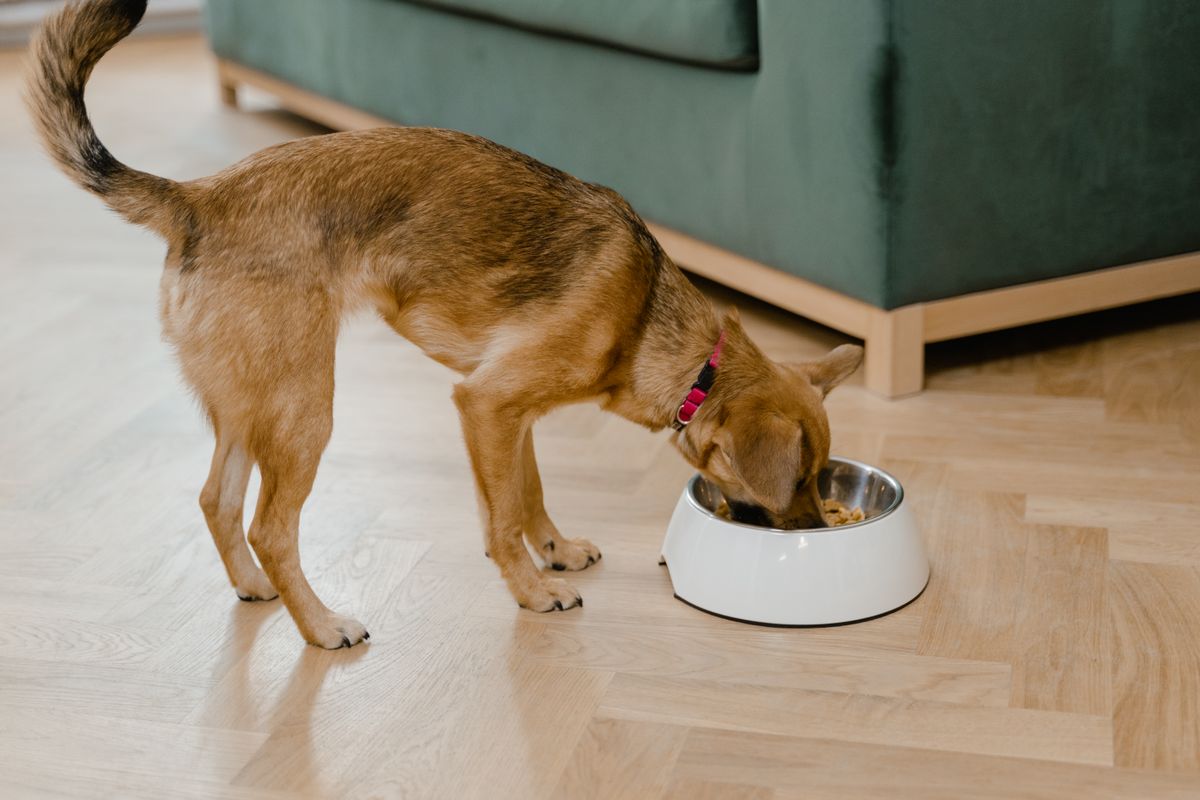
Whichever you choose, start with half the usual amount for the first week. Any change in fibre can briefly change stools. Always keep fresh water available, as fibre needs water to work.
Smell is often the first clue that glands aren't emptying well. If that sounds familiar, read why your dog smells like fish.
When a Supplement Isn't Enough
A supplement supports healthy glands. It can't fix an infected or abscessed gland. See your vet promptly if you notice swelling, redness, blood or pus near the bottom, or your dog is in pain or straining.
Scooting isn't always about glands either. Worms and allergies are common causes too, as our guide to why dogs scoot explains. PDSA also advises against squeezing glands unless there's a problem.
If you're wondering about emptying, our guide to expressing a dog's anal glands at home vs at the vet covers the pros and risks. For the bigger picture, start at our anal gland health hub.
FAQ
What is the best anal gland supplement for dogs in the UK?
There's no single best one for every dog. Look for a named fibre such as pumpkin, psyllium or beet pulp, clear amounts on the label, a named probiotic strain, and a format your dog will eat every day.
Do anal gland supplements actually work?
The evidence is strongest for dietary fibre and firmer stools, which help glands empty naturally. We found no published controlled trial of a finished anal gland supplement, so track your own dog's scooting for six to eight weeks.
Are anal gland chews better than fibre powders?
Not necessarily. Powders and pellets usually give more grams of fibre a day, while chews are easier to give to fussy dogs. Choose the one your dog will take consistently, and ask your vet if you're unsure.
Is there a Glandex alternative in the UK?
Yes. UK options include Gland-EZe chews, YuMOVE Probiotic and Fibre powder, and Protexin Pro-Fibre pellets. Our detailed Glandex alternative guide compares Glandex and Gland-EZe label by label.
How long do anal gland supplements take to work?
Give any fibre supplement several weeks of daily use before judging it. Keep a simple note of scooting, licking and expressing visits so you can compare honestly.
Can I just add pumpkin or fibre to my dog's food?
PDSA suggests a high-fibre diet, specific fibre supplements for pets, or sugar-free bran can help firm stools. Add any fibre gradually, keep water available, and check with your vet first if your dog has a health condition.
Sources
- O'Neill DG et al. (2021). Non-neoplastic anal sac disorders in UK dogs: epidemiology and management aspects of a research-neglected syndrome. Veterinary Record.
- PDSA: Blocked anal glands in dogs
- Leib MS (2000). Treatment of chronic idiopathic large-bowel diarrhea in dogs with a highly digestible diet and soluble fiber. Journal of Veterinary Internal Medicine.
- Alves JC et al. (2021). The use of soluble fibre for the management of chronic idiopathic large-bowel diarrhoea in police working dogs. BMC Veterinary Research.
- Jensen AP, Bjørnvad CR (2019). Clinical effect of probiotics in prevention or treatment of gastrointestinal disease in dogs: a systematic review. Journal of Veterinary Internal Medicine.
- zooplus: Glandex chews UK/EU composition and feeding guide
- YuMOVE: Probiotic & Fibre for Dogs
- VetUK: Protexin Pro-Fibre for Dogs and Cats 500g
- PDSA Pet Store: Protexin Veterinary Pro-Fibre Advanced for Dogs
Ready to support your dog's bottom the simple way? Pick a fibre-led supplement your dog loves, give it every day, and watch the scooting. If a tasty daily chew sounds right, try Gland-EZe with free UK delivery and see the difference for yourself.
This article is for general information only and isn't a substitute for veterinary advice. Glandex is a trademark of Vetnique Labs; YuMOVE is a trademark of Lintbells; Protexin is a trademark of its owner. None has any connection with Doggy Dailies. Product details and prices were checked in November 2026 and may change.
