

Posted by Jamie Sinclair
on October 03, 2026

Fresh, ripe fig flesh is safe for most dogs in small amounts. It provides fibre, potassium and natural sugars, but too much can cause loose stools or an upset tummy. Dried figs are far more concentrated in sugar, so feed even less. The fig tree itself is a different matter entirely - its sap, leaves and unripe fruit contain irritant compounds that can hurt your dog's skin and stomach.
Written by Jamie Sinclair, who writes about canine health, nutrition, and everyday care for Doggy Dailies - focused on translating veterinary research and real ingredient science into practical, honest guidance UK dog owners can use.
Last updated: 3 October 2026
Table of Contents
- Are Figs Safe for Dogs?
- Nutritional Benefits of Figs for Dogs
- Fresh Figs vs Dried Figs: A Side-by-Side Comparison
- The Fig Tree Is a Different Story: Why the Plant Itself Is Toxic
- What Happens If a Dog Eats Fig Leaves or Sap? A Symptom Timeline
- How Much Fig Can My Dog Eat?
- Figs, Diabetic Dogs and Overweight Dogs
- How to Safely Feed Figs to Your Dog
- Common Fig Varieties Grown in UK Gardens
- FAQ
- Sources
Figs are having a moment on UK kitchen counters every late summer, and milder winters mean more gardens now have their own fig tree too. It's natural to wonder whether your dog can share the fruit.
The honest answer has two very different halves: the ripe fruit itself is generally fine in small amounts, but the fig plant - its sap, leaves, bark and unripe fruit - contains compounds that genuinely irritate skin and stomachs.
This guide separates the two clearly, with real nutrition data, a symptom timeline for plant exposure, and guidance for diabetic or overweight dogs. If you're looking for something to support your dog's digestion more consistently than an occasional piece of fruit can, Doggy Dailies' Probiotic Chews are designed for daily use rather than as a treat.
Are Figs Safe for Dogs?
Yes - the ripe, fleshy part of a fig is generally safe for dogs to eat in small amounts. Figs are not on the ASPCA's list of fruits toxic to dogs, unlike grapes, raisins or grapes and sultanas. A couple of small bites of fresh, ripe fig flesh is a reasonable occasional treat for most healthy adult dogs.
That said, moderation matters more with figs than with many fruits. Their natural sugar and fibre content means overdoing it - especially with dried figs - can bring on loose stools, wind or a genuinely upset tummy rather quickly.
Nutritional Benefits of Figs for Dogs
Fresh figs aren't just empty sugar. They contain:
- Dietary fibre - supports regular digestion and gut health
- Potassium - plays a role in muscle and nerve function
- Calcium and magnesium - contribute to bone health
- Antioxidant plant compounds - found throughout the fruit's flesh
None of this means figs "treat" or prevent any health condition. They're a nutritious occasional extra, not a substitute for a complete diet or for Doggy Dailies' Probiotic Chews, which are formulated with a daily probiotic blend to help support everyday digestive health - developed with vet input from Lourdes María Arnedo Amat.

Fresh Figs vs Dried Figs: A Side-by-Side Comparison
Drying fruit removes water and concentrates everything else, including sugar. This table shows why dried figs need a much smaller amount than fresh ones, using USDA FoodData Central values per 100g.
| Per 100g | Fresh Figs | Dried Figs |
|---|---|---|
| Calories | ~74 kcal | ~249 kcal |
| Natural sugars | ~16g | ~48g |
| Dietary fibre | ~2.9g | ~9.8g |
| Water content | ~79% | ~30% |
Weight for weight, dried figs have roughly three times the sugar and fibre of fresh ones. That extra fibre sounds helpful, but too much too fast is exactly what causes gas and loose stools in dogs. Fig Newtons and other baked fig products add sugar, wheat and fat on top, so they're best avoided altogether.
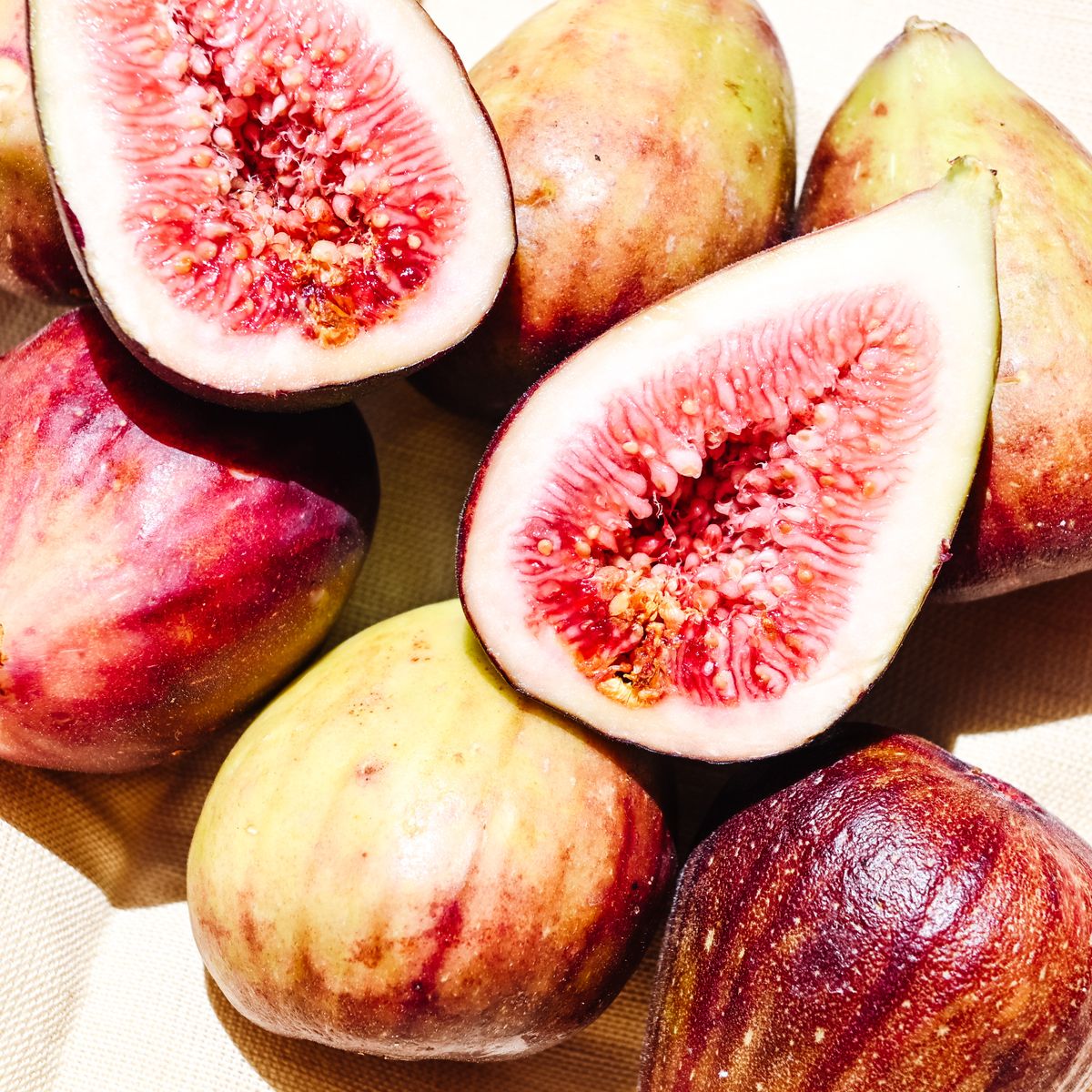
Water content is the other big difference. Fresh figs are nearly four-fifths water, which is part of why a couple of small pieces rarely causes a problem. Dried figs have lost most of that water, so the same bite delivers far more sugar, fibre and calories in one go - a key reason portion size matters so much more with the dried version.
The Fig Tree Is a Different Story: Why the Plant Itself Is Toxic
This is the single most important distinction in this guide. The ripe fruit flesh and the rest of the fig plant are not the same thing, and confusing them is a common - and avoidable - source of worry or genuine harm.
Fig trees (Ficus carica and related ornamental Ficus species) produce a milky white sap in their leaves, stems, bark and unripe green fruit. That sap contains two groups of irritant compounds:
- Ficin - a proteolytic (protein-digesting) enzyme that directly irritates skin and the lining of the mouth and gut on contact, independent of sunlight
- Psoralens (furocoumarins) - light-reactive compounds that cause phytophotodermatitis: a chemical burn that only fully develops once the affected skin is exposed to sunlight
A 2023 case report published on PubMed documented fig tree-induced phytophotodermatitis in a person after sap contact followed by sun exposure, confirming the furocoumarin mechanism in real clinical detail. The ASPCA's Animal Poison Control Center lists fig (Ficus) as toxic to dogs for this same reason - sap contact can cause oral and skin irritation, drooling and vomiting.
In practice, this means: never let your dog chew fig tree leaves, stems or bark, don't let bare skin or paws linger in contact with a damaged branch's sap, and keep ornamental weeping fig houseplants (a common Ficus species) out of reach too.
What Happens If a Dog Eats Fig Leaves or Sap? A Symptom Timeline
Reactions to fig plant material tend to follow a rough pattern, though severity varies with how much contact occurred:
- Within minutes: drooling, pawing at the mouth, or licking lips repeatedly after chewing leaves or stems
- Within 30 minutes to 2 hours: vomiting, mild diarrhoea, or visible redness inside the mouth
- Hours to 2 days (if skin contact occurred in sunlight): redness, swelling or blistering on exposed skin where sap touched - the delayed phototoxic reaction
Contact your vet promptly if your dog has chewed fig leaves, stems or unripe fruit, even if symptoms seem mild at first - skin reactions in particular can worsen over the following day or two as the phototoxic effect develops.
How severe the reaction is depends on several things: how much sap actually contacted the skin or mouth, whether the affected area then sat in direct sunlight, and each individual dog's own sensitivity. A brief nibble of a leaf is rarely an emergency, but chewing through a stem or getting sap on bare skin on a sunny day warrants a same-day call to your vet.
How Much Fig Can My Dog Eat?
There's no single correct amount for every dog, since it depends on size, but a useful starting point is a small piece of peeled, ripe fig flesh - no more than one small bite for a small dog, or a few small pieces for a larger dog, offered occasionally rather than daily. Always introduce any new food gradually and watch for loose stools before offering more next time.
Skip dried figs and fig-based baked goods altogether, or offer only a tiny sliver as an occasional exception - their concentrated sugar makes them a poor regular treat for any dog.
Figs, Diabetic Dogs and Overweight Dogs
Figs' natural sugar content matters more for some dogs than others. If your dog is overweight, prone to pancreatitis, or living with diabetes, it's safest to skip figs entirely rather than work them into the diet - even "natural" sugar adds to daily calorie and carbohydrate intake, and sudden sugar spikes are unhelpful for a diabetic dog's glucose control.
The same caution applies to dogs managing pancreatitis risk, since high-sugar, high-fibre treats can trigger digestive upset in a sensitive gut. Senior dogs with slower digestion may also do better with a smaller amount than a young, active adult dog of the same size.
How to Safely Feed Figs to Your Dog
- Choose a fully ripe fig - unripe green fruit contains more of the irritant sap compounds found in the rest of the plant
- Wash it thoroughly to remove any surface residue
- Remove the stem and peel away the skin if your dog has a sensitive stomach
- Cut the flesh into small, manageable pieces to avoid a choking risk, especially for small breeds
- Offer a tiny amount first and wait 24 hours before offering more, watching for any stomach upset
A fig that's fallen underripe from a garden tree, or one with skin that's split and started leaking sap, is not a good candidate to share - stick to fully ripe, intact, shop-bought or home-grown fruit.
Common Fig Varieties Grown in UK Gardens
'Brown Turkey' is by far the most widely grown fig variety in UK gardens and allotments, prized for tolerating cooler summers better than Mediterranean varieties. 'Brunswick' and 'Rouge de Bordeaux' are also popular with UK growers.
All of these are the same species, Ficus carica, so the same safety guidance applies regardless of which variety is growing in your garden - ripe flesh in moderation, plant parts kept well away from your dog.
If you've recently planted a young fig tree, keep an eye on it over its first couple of summers: low-hanging branches and fallen unripe fruit are easiest for a curious dog to reach, and that's exactly the plant material that carries the irritant sap.
Frequently Asked Questions
Can dogs eat fig skin?
Yes, ripe fig skin is edible and not toxic, though its slightly tough, seedy texture upsets some dogs' stomachs more than the flesh alone. If your dog has a sensitive gut, peel the fig before offering it.
How many figs can a dog eat?
A small dog should have no more than one small bite of ripe fig flesh occasionally; a larger dog can manage a few small pieces. There's no fixed safe amount for every dog - start small and watch how your dog's stomach reacts.
What should I do if my dog eats a fig leaf or stem?
Rinse your dog's mouth gently with water if they'll allow it, keep them out of direct sunlight for the next day or two, and call your vet or the Veterinary Poisons Information Service for advice - especially if you notice drooling, vomiting or skin redness.
Are dried figs or Fig Newtons safe for dogs?
Dried figs are far more concentrated in sugar than fresh ones and should only ever be an occasional sliver, not a regular treat. Fig Newtons and similar baked fig products add further sugar, wheat and fat, so they're best avoided for dogs altogether.
Is fig jam or fig roll safe for dogs?
No - fig jam, fig rolls and other processed fig products contain added sugar and sometimes other ingredients unsuitable for dogs. Stick to plain, fresh, ripe fig flesh only.
Does it matter which fig variety my dog eats?
No - common varieties like Brown Turkey, Mission and Calimyrna are all the same species (Ficus carica) and carry the same guidance: ripe flesh in moderation is fine, the rest of the plant is not.
Sources
- ASPCA Animal Poison Control Center, "Toxic and Non-Toxic Plants: Fig"
- PubMed, "Fig Tree-Induced Phytophotodermatitis: A Case Report on the Perils of a Hobby" (PMID: 37581161)
- USDA FoodData Central, Figs, raw and dried - nutrient data
- Veterinary Poisons Information Service (VPIS), vpisglobal.com
This article is for general information only and does not replace advice from your own vet. If your dog has eaten fig leaves, stems, sap or a large amount of fig fruit, or is showing any signs of illness, contact your vet or an animal poisons helpline promptly.
