

Posted by Jamie Sinclair
on October 03, 2026

Tea tree, pennyroyal, wintergreen, pine, cinnamon, clove and concentrated citrus oils are genuinely toxic to dogs, causing symptoms from vomiting to organ damage. Lavender, chamomile and frankincense are generally lower-risk in a diffuser at a safe distance, but no oil is truly safe to ingest or apply undiluted to skin, and cats are far more sensitive than dogs.
Written by Jamie Sinclair, who writes about canine health, nutrition, and everyday care for Doggy Dailies — focused on translating veterinary research and real ingredient science into practical, honest guidance UK dog owners can use.
Last updated: 3 October 2026
Table of Contents
- Why Some Essential Oils Are Dangerous for Dogs
- Essential Oils Toxic to Dogs
- "Natural" Flea Products and Why They Carry Real Risk
- Essential Oils Considered Lower-Risk (With Real Caveats)
- Cats Are Far More Sensitive Than Dogs
- Safer Diffuser Practices, If You Choose to Use One
- Symptoms of Essential Oil Poisoning in Dogs
- What to Do If You Suspect Essential Oil Poisoning
- FAQ
- Sources
Why Some Essential Oils Are Dangerous for Dogs
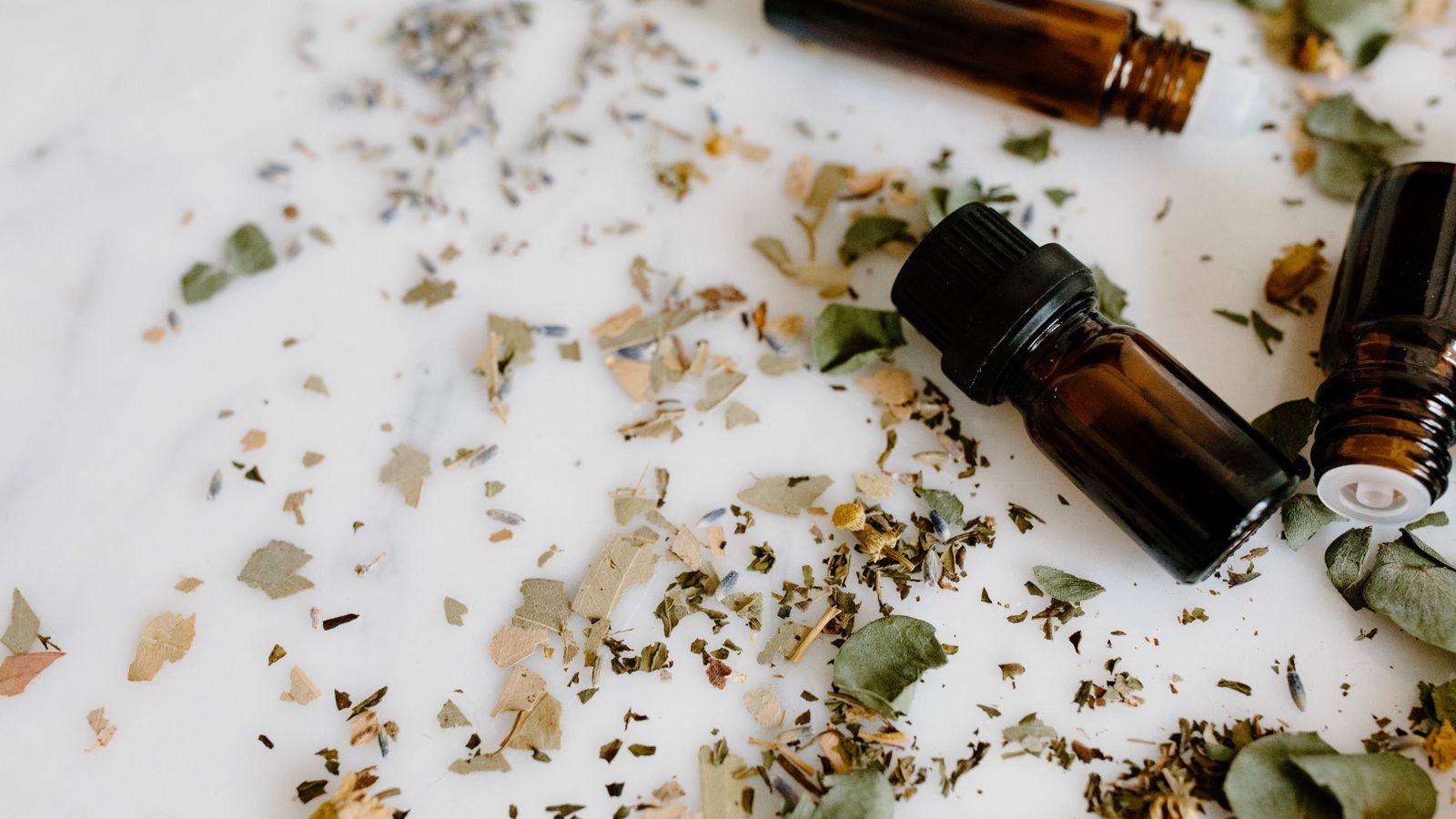
Essential oils are highly concentrated plant extracts. A single drop can contain the aromatic compounds of an entire handful of plant material, which is exactly why they cause problems dogs rarely face from the whole plant itself. Dogs absorb these compounds through the skin, through the lungs, and especially through the gut if they lick or swallow them.
Dogs also lack some of the liver enzymes humans rely on to break certain compounds down efficiently, according to VCA Animal Hospitals. That makes toxicity a real possibility even from products marketed as "natural" or "pet-friendly" — those words are not regulated claims, and plenty of genuinely dangerous oils turn up in household diffusers, cleaning sprays and DIY flea treatments.
Essential Oils Toxic to Dogs
The following oils are consistently named by veterinary toxicology sources as genuinely dangerous to dogs, whether ingested, applied to the skin, or diffused in high concentrations in an unventilated room.
| Essential Oil | Main Risk to Dogs |
|---|---|
| Tea tree (melaleuca) | The single most common essential oil poisoning case seen by Pet Poison Helpline; causes wobbliness, rear-leg weakness, vomiting and low body temperature |
| Pennyroyal | Vomiting and diarrhoea, sometimes bloody, that can progress to liver failure |
| Wintergreen | Contains methyl salicylate, an aspirin-like compound; causes severe gut irritation, ulcers and potential kidney or liver damage |
| Sweet birch | Same methyl salicylate risk as wintergreen |
| Pine | Skin and gut irritation, bloody vomiting, drooling, weakness and coordination problems |
| Cinnamon | Skin and mouth irritation, vomiting and drooling |
| Clove | Liver stress and gut irritation, especially in concentrated or undiluted form |
| Citrus oils (d-limonene) | Risk rises sharply with concentration; found in some DIY and "natural" flea products at levels that have caused real poisoning cases |
| Ylang ylang | Low heart rate, low blood pressure, vomiting and uncoordinated movement |
| Peppermint | Listed as one to avoid by multiple veterinary sources; can irritate skin and the digestive tract |
The common thread is concentration. AKC Reunite puts it plainly: "the higher the concentration of the essential oil, the greater the risk to your pet." A heavily diluted trace in a scented candle is a different exposure to a few drops of 100% pure oil on skin or in water a dog then drinks.
Note: the cinnamon risk above is specifically about concentrated cinnamon essential oil, not the ground spice from your kitchen cupboard. Plain ground cinnamon carries a very different, much lower risk profile — see our full guide to can dogs have cinnamon? for the amounts, the cassia-versus-Ceylon distinction, and the inhalation risk of the dry powder.
"Natural" Flea Products and Why They Carry Real Risk
Some DIY and "natural" flea or tick repellents use tea tree oil, citrus/d-limonene, pennyroyal or pine oil as the active ingredient, often at much higher concentrations than a diffuser would ever reach. These products are a genuine source of real poisoning cases, not a theoretical risk.
Pennyroyal in particular has a long history as a folk flea remedy, which is exactly why Pet Poison Helpline flags it by name.
Never apply any essential oil product directly to a dog's coat or skin as a flea treatment unless a vet has specifically recommended and formulated it for veterinary use. Shop-bought, vet-approved flea and tick products remain the safer, evidence-based choice.
Essential Oils Considered Lower-Risk (With Real Caveats)
A smaller group of oils is generally considered lower-risk for dogs when used in a diffuser, at a safe distance, and properly diluted. PetMD names lavender, chamomile, frankincense, myrrh, ginger, rosemary and bergamot in this category — but describes them as "often considered safer," not risk-free, and says they "should still be used cautiously."
That caution matters. Even lavender, the most commonly recommended calming oil, can still cause skin irritation if applied undiluted, or vomiting and lethargy if a dog licks or swallows it.
"Lower-risk" means less dangerous than tea tree or pennyroyal. It does not mean safe to ingest or safe to apply neat to skin. No source in this field makes that claim about any essential oil, and neither do we.
Cats Are Far More Sensitive Than Dogs
If there are cats in the household, this changes the calculation substantially. Cats process essential oil compounds far less efficiently than dogs do.
Oils generally considered lower-risk for dogs, including tea tree and some citrus oils, can be seriously dangerous for cats in much smaller amounts, per Pet Poison Helpline's cat-specific guidance and VCA's cat poisoning page. A household with both should plan around the more sensitive animal.
Safer Diffuser Practices, If You Choose to Use One

If you want to use a lower-risk oil like lavender or chamomile in a diffuser around a dog, several precautions genuinely reduce the risk, based on the guidance above:
- Run the diffuser in a large, well-ventilated room, never a small or closed space such as a crate room or bathroom
- Let your dog leave the room freely rather than confining them near the diffuser
- Diffuse intermittently, not continuously for hours at a time
- Keep the diffuser and any bottles well out of reach of a dog that chews or noses into things
- Watch your dog closely the first few times — PetMD notes some dogs tolerate diffusers fine while others develop respiratory irritation or sensitivity
- Stop immediately and ventilate the room if your dog seems to be avoiding the area, sneezing, or pawing at their face or nose
Speak to your vet before using any essential oil product around a dog with pre-existing breathing problems, liver or kidney disease, or a history of seizures, and before using any oil around puppies.
Symptoms of Essential Oil Poisoning in Dogs
Watch for the following signs after any suspected exposure, whether through ingestion, skin contact, or a strong concentration in the air:
- Vomiting, sometimes with a noticeable oil smell
- Drooling and lethargy
- Difficulty breathing or laboured breathing
- Uncoordinated walking or an unsteady, wobbly gait
- Muscle tremors or weakness
- Redness, burns, or irritation on the lips, gums, tongue or skin
- Unusually low body temperature
Symptoms can appear within minutes of skin contact or inhalation, or develop more gradually after ingestion, so don't assume a delayed reaction means the exposure was harmless.
What to Do If You Suspect Essential Oil Poisoning
Contact your vet or the Veterinary Poisons Information Service's Animal PoisonLine (UK) on 01202 509 000 immediately if your dog has eaten, licked, or been heavily exposed to an essential oil, even if they seem fine at first. This is a 24-hour UK-specific emergency line; a consultation fee applies (£35 daytime, £45 evenings/nights/weekends).
While you call:
- Do not induce vomiting or give activated charcoal unless specifically told to by a vet — both can make things worse with oil products
- If the oil touched the skin or coat, wash the area with a mild dish soap and water to remove the remaining product
- Bring the bottle or product packaging with you to the vet so they can identify exactly what your dog was exposed to
- Note roughly how much and when, since this genuinely helps a vet judge urgency and treatment
Our guide to plants poisonous to dogs and our blue-green algae poisoning guide cover two more common household and outdoor toxins worth knowing alongside this one.
FAQ
Is it safe to diffuse essential oils around dogs?
Some lower-risk oils like lavender or chamomile may be tolerated in a well-ventilated room at a safe distance, but genuinely dangerous oils such as tea tree, pennyroyal, wintergreen and pine should never be diffused around dogs, and any dog should be free to leave the room.
What essential oils are toxic to dogs?
Tea tree (melaleuca), pennyroyal, wintergreen, sweet birch, pine, cinnamon, clove, concentrated citrus oils (d-limonene), ylang ylang and peppermint are consistently named as toxic or risky for dogs by veterinary poison control sources.
Can I put essential oils directly on my dog's skin?
No. Veterinary sources consistently advise against applying any essential oil undiluted to a dog's skin or coat unless a vet has specifically directed it, since concentrated oil can cause chemical burns and absorbs readily into the bloodstream.
Is lavender oil actually safe for dogs?
Lavender is generally considered one of the lower-risk oils for dogs when properly diluted and diffused at a safe distance, but it is not risk-free. It can still irritate skin if applied undiluted, or cause vomiting and lethargy if ingested.
Are essential oils more dangerous for cats than dogs?
Yes. Cats process essential oil compounds far less efficiently than dogs, so oils considered lower-risk for dogs can still be genuinely dangerous for cats in much smaller amounts. Households with both should plan around the cat.
What should I do if my dog is poisoned by an essential oil?
Contact your vet or the UK's Animal PoisonLine on 01202 509 000 immediately. Do not induce vomiting unless told to. Wash any affected skin with mild dish soap, and bring the product packaging to the vet.
Sources
- VCA Animal Hospitals — Essential Oil and Liquid Potpourri Poisoning in Dogs
- Pet Poison Helpline — Essential Oils Are Toxic to Dogs
- Pet Poison Helpline — Essential Oils and Cats
- PetMD — Essential Oils Safe for Dogs: 7 to Use and 12 to Avoid
- AKC Reunite — Dangers of Essential Oils for Pets
- VCA Animal Hospitals — Essential Oil and Liquid Potpourri Poisoning in Cats
- Animal PoisonLine (Veterinary Poisons Information Service, UK)
This article is for general information only and is not a substitute for veterinary advice or emergency care. If your dog has had any contact with an essential oil and is showing any symptoms, or you are at all unsure, treat it as an emergency: contact your vet or the Animal PoisonLine (01202 509 000) immediately rather than waiting to see if symptoms develop.
