

Posted by Jamie Sinclair
on September 17, 2026

1 in 8 dogs in the UK are diagnosed with periodontal disease every single year, according to real primary-care veterinary data — and some breeds face far higher odds than that. Regular teeth cleaning is one of the few genuinely preventable causes of pain, tooth loss and even wider health problems in dogs, yet it's one of the most skipped parts of a dog's routine care. This guide covers what actually works, what the VOHC seal means and why it matters, how to brush safely, and how often you really need to do it. For the full disease picture — stages, systemic health risks and what professional treatment involves — see our complete guide to dental disease in dogs.
Written by Jamie Sinclair, who writes about canine health, nutrition, and everyday care for Doggy Dailies — focused on translating veterinary research and real ingredient science into practical, honest guidance UK dog owners can use.
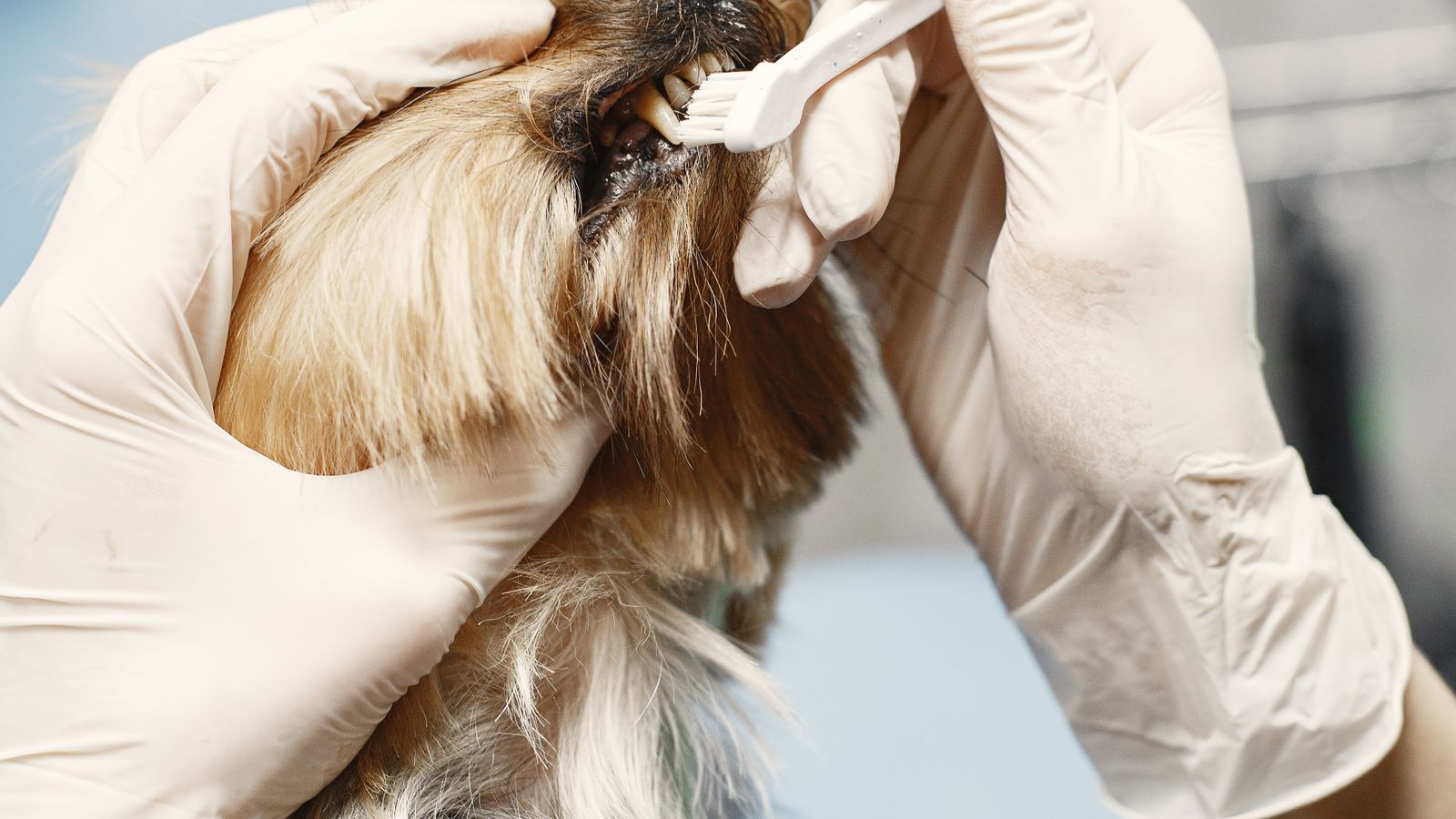
Table of Contents
- Why Dental Care Actually Matters
- How Common Is Dental Disease, Really?
- Signs of Dental Disease
- How to Brush Your Dog's Teeth, Step by Step
- Dental Chews: What the VOHC Seal Actually Means
- Other Options: Wipes, Water Additives & Diet
- Professional Cleaning: What Vets Actually Do
- How Often Do You Really Need to Clean Your Dog's Teeth?
- FAQ
- Sources
Why Dental Care Actually Matters
Dental disease in dogs isn't just about bad breath. Left untreated, plaque hardens into tartar, which inflames and eventually destroys the tissue and bone holding teeth in place — a process called periodontal disease. Beyond tooth loss and chronic pain (which dogs are notoriously good at hiding), the bacteria involved can enter the bloodstream and has been linked to strain on the heart, liver and kidneys in more advanced cases. Regular cleaning, whichever method you use, is genuinely one of the highest-value things you can do for a dog's long-term health.
There's also a practical, financial reason to stay on top of it. Catching dental disease early, or preventing it altogether, usually means nothing more than a routine check-up and maybe a scale and polish. Left to progress for years, it can mean multiple tooth extractions under a longer anaesthetic, antibiotics for infection, and a recovery period where your dog is sore and off their food — a far more stressful and expensive outcome for everyone involved than a few minutes of brushing a few times a week.
How Common Is Dental Disease, Really?
Most "dog dental care" guides quote vague statistics, so it's worth citing the real number: a 2021 VetCompass study of over 22,000 dogs across 784 UK veterinary clinics found that 12.5% of dogs — roughly 1 in 8 — were diagnosed with periodontal disease in a single year (O'Neill et al., 2021, Journal of Small Animal Practice). Risk wasn't spread evenly:
- Age: dogs aged 8 and over were over three times more likely to be affected than dogs aged 2–4
- Size: dogs under 15kg were 2.5 times more likely to be affected than dogs weighing 30–40kg
- Breed: Greyhounds (32.2%), King Charles Spaniels (30.1%), Toy Poodles (26.0%), Cavalier King Charles Spaniels (25.3%), Yorkshire Terriers (22.2%) and Border Terriers (22.1%) topped the risk list
If your dog falls into any of these higher-risk groups, a consistent cleaning routine matters even more than average. For the full stage-by-stage breakdown of how periodontal disease actually progresses, see our dental disease pillar guide.
Signs of Dental Disease
- Persistent bad breath (not just "dog breath" — a genuinely foul smell)
- Yellow or brown tartar buildup, especially along the gumline
- Red, swollen or bleeding gums
- Reluctance to chew, dropping food, or favouring one side of the mouth
- Pawing at the face or mouth
- Loose or missing teeth
- Visible drooling, sometimes blood-tinged
Any of these are worth a vet check — dental disease doesn't reverse on its own, and pain in the mouth is one of the things dogs mask best.
How to Brush Your Dog's Teeth, Step by Step
- Use a dog-specific toothpaste. Human toothpaste often contains xylitol or fluoride levels that are unsafe for dogs — never substitute it.
- Start slow. Let your dog taste the toothpaste first, then get them used to you touching their mouth and lips before introducing the brush.
- Use a soft-bristled dog toothbrush or a finger brush, angled at 45 degrees toward the gumline.
- Focus on the outer surfaces of the teeth — dogs' tongues do a reasonable job of keeping the inner surfaces cleaner naturally.
- Work in small circular motions for 30 seconds to a minute per side, working up to it gradually rather than forcing a full clean on day one.
- Reward heavily with praise or a treat afterwards so your dog builds a positive association.
Daily brushing is the gold standard recommended by vets — the same as for humans — though realistically, 3–4 times a week still makes a meaningful difference over doing nothing at all.
Dental Chews: What the VOHC Seal Actually Means
Not all "dental" chews and treats are backed by real evidence, and this is where most guides fall short. The Veterinary Oral Health Council (VOHC) is an independent body that awards its seal of acceptance only to dental products that have passed standardised clinical trials showing a genuine reduction in plaque and/or tartar accumulation — not just a marketing claim of "cleans teeth." A product carrying the VOHC seal has real trial data behind it; one that simply says "dental" or "cleaning" on the packaging may not. When choosing a dental chew, checking for the VOHC seal (or asking your vet for a current recommendation) is a genuinely useful filter most owners never think to apply.
Other Options: Wipes, Water Additives & Diet
Brushing is the most effective single method, but it isn't the only tool:
- Dental wipes — a reasonable middle ground for dogs who won't tolerate a brush, though less effective than brushing at the gumline
- Water additives — added to drinking water to reduce bacteria; evidence is more limited than for brushing or VOHC-accepted chews, and effectiveness varies by product
- Dental-specific kibble — sourced with a larger kibble size and texture designed to scrape the tooth surface as the dog chews; genuinely helps some dogs, though it's not a substitute for brushing
- Raw bones — a contentious area; some vets support appropriately-sized raw bones for mechanical cleaning, while others warn of real fracture and choking risk, so this is worth discussing directly with your vet rather than following generic online advice either way
Professional Cleaning: What Vets Actually Do
Once tartar has hardened below the gumline, no amount of home brushing will remove it — this needs a professional scale and polish under general anaesthetic, which lets the vet clean below the gumline safely and take dental X-rays if needed. This isn't a sign home care has failed; even dogs with excellent home routines can need periodic professional cleans, particularly the higher-risk breeds and older dogs identified in the VetCompass data above. Your vet will advise on frequency based on what they see at your dog's regular check-up.
Before the procedure, most vets will run a pre-anaesthetic blood test, especially for older dogs, to check that the liver and kidneys can safely process the anaesthetic. During the clean itself, the vet or a veterinary nurse will scale away tartar above and below the gumline with ultrasonic equipment, polish the enamel to slow future plaque build-up, and take dental X-rays to check for hidden problems below the surface, such as root damage that isn't visible to the naked eye. Any teeth that are too damaged to save are typically extracted in the same procedure, so your dog only needs to go under anaesthetic once rather than facing a second appointment later.
How Often Do You Really Need to Clean Your Dog's Teeth?
Realistically: brushing daily (or as close to it as you can manage) at home, a VOHC-accepted dental chew as a genuine supplement rather than a replacement, and a professional check at your dog's annual or twice-yearly vet visit so any tartar building up below the gumline gets caught early. Dogs in the higher-risk groups above may need professional cleans more often — your vet is the right person to set that schedule for your individual dog.
FAQ
How common is dental disease in dogs?
A 2021 UK VetCompass study found 12.5% of dogs — roughly 1 in 8 — were diagnosed with periodontal disease in a single year, with older dogs, smaller breeds, and certain breeds like Greyhounds and Cavalier King Charles Spaniels at significantly higher risk.
How often should I brush my dog's teeth?
Daily is the gold standard recommended by vets, though brushing 3-4 times a week still makes a meaningful difference compared with not brushing at all.
What does the VOHC seal mean on dental chews?
The Veterinary Oral Health Council awards its seal only to products that have passed standardised clinical trials showing a real reduction in plaque or tartar - it's a genuine evidence filter, not just a marketing term.
Can I use human toothpaste on my dog?
No. Human toothpaste can contain xylitol or fluoride levels that are unsafe for dogs. Always use a toothpaste made specifically for dogs.
Are dental chews enough on their own?
Even VOHC-accepted chews work best as a supplement to brushing, not a replacement for it. Combining daily brushing with a proven dental chew gives the most complete protection.
Do dogs need professional teeth cleaning at the vet?
Yes, periodically. Once tartar hardens below the gumline, only a professional scale and polish under anaesthetic can remove it safely, even for dogs with a good home routine.
Sources
- O'Neill et al. (2021) — Epidemiology of periodontal disease in dogs in the UK primary-care veterinary setting, Journal of Small Animal Practice
- Veterinary Oral Health Council — official VOHC seal criteria
- Royal Veterinary College — Epidemiology of Canine Periodontal Disease summary
This article is for general information only and isn't a substitute for veterinary advice. If you notice signs of dental disease, please book a check-up with your vet.
