

Posted by Jamie Sinclair
on August 15, 2026

The clearest way to tell if your dog loves you is to watch for sustained, relaxed eye contact, a loose full-body wag, leaning or seeking closeness, and genuine (not anxious) excitement when you come home - all backed by real oxytocin and brain-imaging research, not just guesswork. Dogs also show measurable attachment patterns strikingly similar to those seen in human infants, using their owner as what researchers call a "secure base."
Written by Jamie Sinclair, who writes about canine health, nutrition, and everyday care for Doggy Dailies - focused on translating veterinary research and real ingredient science into practical, honest guidance UK dog owners can use.
Last updated: 18 September 2026
Table of Contents
- The science behind dog-owner bonding
- Dogs show real attachment styles, not just habits
- How to tell if your dog loves you: the signs
- Behaviours that look like love but might be something else
- Does age or breed change how a dog shows affection?
- How to strengthen the bond
- When attachment becomes a welfare concern
- Related: More on Dog Behaviour & Bonding
- Frequently asked questions
The science behind dog-owner bonding
A 2015 study published in Science found that mutual gazing between dogs and their owners triggers a rise in oxytocin - often called the "love hormone" - in both species, in a pattern the researchers compared to parent-infant bonding. Notably, hand-raised wolves in the same study showed no such effect when gazing at their human carers, suggesting this specific gaze-based bonding loop is something dogs evolved alongside humans rather than something all canines share.
Separately, a 2014 fMRI study from Emory University trained dogs to lie still in an MRI scanner and found their brain's reward centre (the caudate nucleus) activated more strongly in response to their owner's scent than to any other smell, including that of unfamiliar humans or other dogs. The researchers were careful not to claim this proves dogs "love" in the exact human emotional sense - but it's genuine, measurable neurological evidence of a real, positive bond, not simply food-motivated companionship.
Dogs show real attachment styles, not just habits
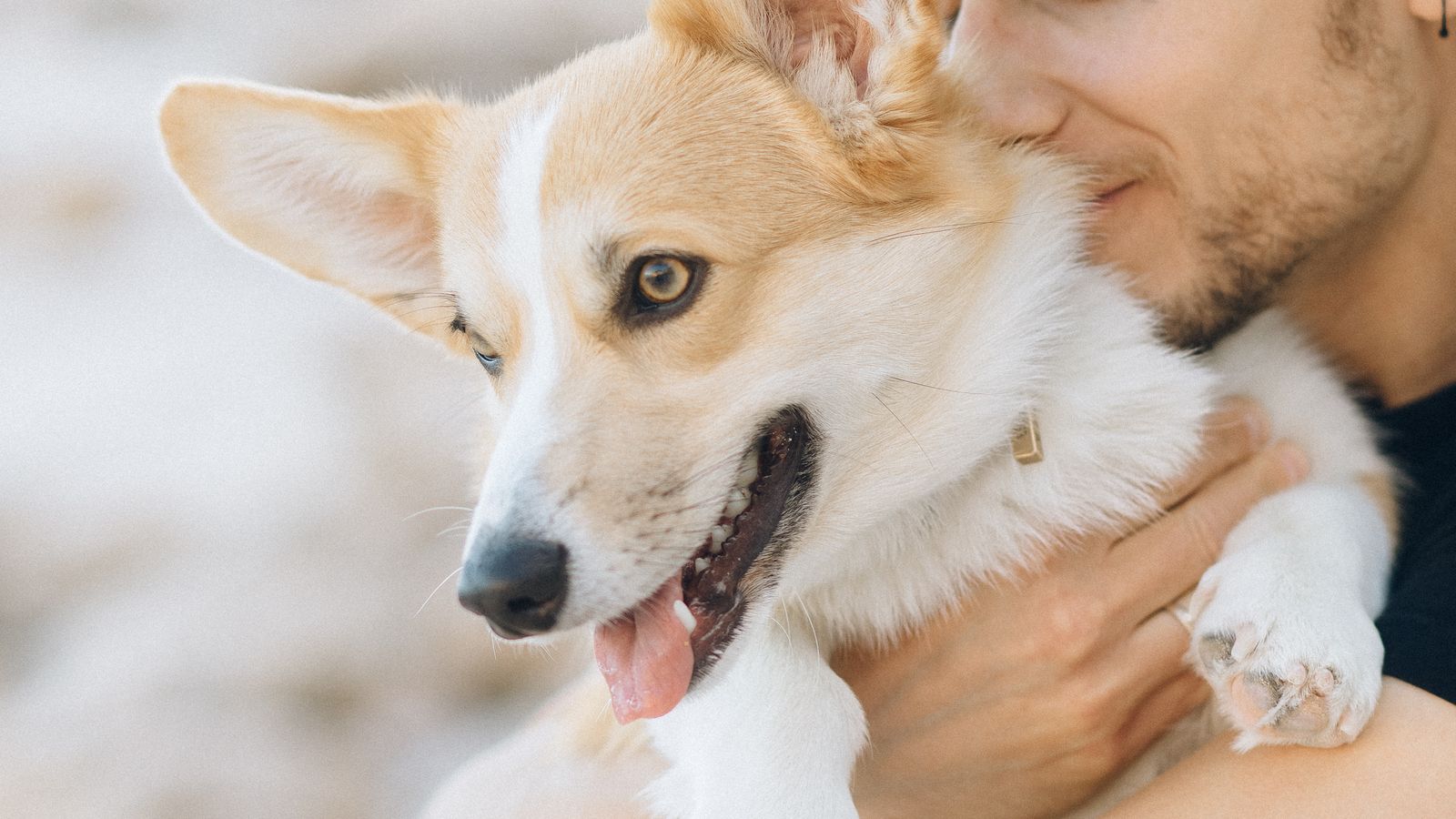
This is the part most "signs your dog loves you" articles skip entirely. In 1998, researchers adapted Mary Ainsworth's famous "Strange Situation Test" - originally designed to study attachment between human infants and their mothers - for use with dogs and their owners. In the resulting study, published in the Journal of Comparative Psychology, dogs left briefly alone with a stranger, then reunited with their owner, showed the same secure-base pattern seen in human toddlers: they explored a novel room more confidently when their owner was present, showed distress cues when the owner left, and sought contact and calmed down faster specifically when the owner (not the stranger) returned.
This matters because it shows the bond isn't just about who feeds or walks the dog - dogs distinguish their primary attachment figure from other familiar, friendly people, and specifically use that person as a psychological anchor when something in their environment feels uncertain. It's one of the closest behavioural parallels to human infant attachment found anywhere in animal research.
How to tell if your dog loves you: the signs
Individually, none of these signs is absolute proof - context and a dog's overall body language matter. Together, though, they build a genuinely reliable picture:
- Sustained, soft eye contact - dogs rarely hold prolonged eye contact with people they don't trust; a relaxed gaze (not a hard stare) is directly linked to the oxytocin response above
- Leaning or seeking physical closeness - dogs who feel securely attached often want to be physically near you without being asked
- A loose, full-body wag - especially a low-to-mid, relaxed wag paired with soft ears and a relaxed mouth, rather than a stiff, high, fast wag
- Following you from room to room - consistent with using you as a secure base, per the attachment research above
- Bringing you toys or items - a form of social sharing behaviour seen in bonded dogs
- Genuine, relaxed excitement on your return - distinct from the frantic, distressed greeting seen in separation-related anxiety (see below)
- Choosing to sleep near or leaning on you - dogs are vulnerable when asleep, so choosing proximity to you specifically is a trust signal
- Calming down faster when you return after a stranger has been present - the specific "secure base" effect documented in the 1998 Strange Situation research
Behaviours that look like love but might be something else
Not every clingy or excitable behaviour is a straightforward sign of affection, and it's worth knowing the difference:
- Frantic, prolonged greeting behaviour that includes shaking, drooling, house-soiling or destructive behaviour while you're out is more consistent with separation-related distress than simple excitement - genuine happy greetings settle quickly, while anxious ones don't. Our guide to understanding separation anxiety in dogs covers this distinction in more depth.
- Constant, anxious shadowing where a dog seems unable to settle unless in physical contact, especially if paired with distress when briefly separated even within the home, can point towards an attachment difficulty rather than a healthy bond.
- Jumping up or mouthing can be affection-seeking, excitement, or simply an under-exercised dog releasing energy - it's not a reliable love signal on its own, and if it looks more like genuine hyperactivity and impulsivity than excitement, our guide on canine ADHD and hyperkinesis covers that distinction.
- Sudden withdrawal or low mood is the opposite pattern worth flagging - a dog that's become unusually subdued, less interested in you, or withdrawn isn't showing reduced love, it's more often a sign of an underlying medical issue, stress, or low mood worth checking out; see our guide on whether your dog might be depressed for more.
None of this means a dog showing these behaviours doesn't love its owner - it usually does - but persistent anxious attachment is a welfare issue worth addressing with a vet or qualified behaviourist, not just a stronger sign of devotion.
Does age or breed change how a dog shows affection?
The underlying bonding mechanisms (oxytocin release, secure-base attachment) appear consistent across breeds and ages, but how visibly a dog expresses them varies. Puppies and adolescent dogs often show more overt, physically demonstrative affection - leaning, jumping, following closely - simply because they're still learning independence. Older dogs may show quieter, calmer signs of attachment, such as choosing to rest near you rather than actively seeking attention, which can be easy to underread as disinterest when it's actually settled, secure trust. Breed-typical temperament (a naturally reserved sighthound versus a naturally demonstrative spaniel, for example) shapes the volume of the signal, not whether the underlying bond exists.
How to strengthen the bond
- Quality time, not just proximity - active engagement (play, training, walks) builds attachment more effectively than simply being in the same room. Our guide on why playing with your dog matters covers this in more depth.
- Consistency and predictability - dogs feel more secure, and show stronger attachment behaviours, when routines are stable
- Positive reinforcement - rewarding good behaviour builds trust considerably more reliably than punishment-based methods
- Physical touch on their terms - gentle petting that the dog actively seeks or accepts releases oxytocin in both dog and owner; touch a dog tolerates but doesn't seek doesn't have the same effect
When attachment becomes a welfare concern
Contact your vet or a qualified clinical animal behaviourist if your dog shows:
- Signs of genuine panic (destructive behaviour, house-soiling, prolonged vocalising) specifically when left alone, even briefly
- Inability to settle or eat unless in physical contact with you
- Sudden changes in attachment behaviour, which can occasionally signal an underlying medical issue rather than a purely behavioural one
If anxious attachment is part of the picture, our guide on easing dog anxiety covers practical, evidence-based strategies.
Related: More on Dog Behaviour & Bonding
- Understanding Separation Anxiety in Dogs
- Expert Tips for Easing Dog Anxiety and Calming Your Dog
- Why Playing With Your Dog Is Essential For Both Of You
Frequently asked questions
How can I tell if my dog loves me?
Look for sustained, relaxed eye contact, a loose full-body wag, seeking physical closeness without being asked, and genuine (not anxious) excitement when you return. Research shows these link to a real oxytocin bonding response, and dogs also show measurable secure-base attachment to their owner specifically, similar to patterns seen in human infants.
Do dogs really love their owners, scientifically speaking?
Research strongly suggests dogs form genuine attachment bonds with their owners, involving the same oxytocin system seen in human parent-child bonding, plus attachment patterns comparable to human infants in adapted Strange Situation Test research. Scientists are careful not to claim this is identical to human love, but it's measurable, real attachment - not simple food-motivated companionship.
What's the single biggest sign a dog loves you?
Sustained, relaxed eye contact is one of the strongest individual signals, since it's directly linked to oxytocin release in both dog and owner. Combined with using you specifically as a "secure base" when anxious, it's about as close to measurable proof as animal behaviour research gets.
Is my dog's affection just learned behaviour?
Often both. Dogs do learn which behaviours get a positive response, but the underlying emotional bond - backed by hormonal and neurological research, plus attachment-style studies - appears to be a genuine bond rather than purely a trained response.
How is excited greeting behaviour different from separation anxiety?
A genuinely happy greeting is brief and settles quickly once you're home. Separation-related distress tends to involve frantic, prolonged behaviour - shaking, drooling, house-soiling or destructiveness - that reflects real anxiety rather than simple joy, and is worth discussing with a vet or behaviourist if it's a consistent pattern.
How can I strengthen my bond with my dog?
Quality time (active engagement, not just proximity), consistent routines, positive reinforcement, and physical touch your dog actively seeks rather than merely tolerates all help build and reinforce a genuine bond.
Sources
- Nagasawa, M. et al. "Oxytocin-gaze positive loop and the coevolution of human-dog bonds." Science (2015). science.org
- Berns, G. et al. Emory University fMRI study on canine reward response to owner scent (2014). pubmed.ncbi.nlm.nih.gov
- Topál, J., Miklósi, Á., Csányi, V., Dóka, A. "Attachment behavior in dogs (Canis familiaris): A new application of Ainsworth's (1969) Strange Situation Test." Journal of Comparative Psychology (1998). doi.org
This article is for general information and reflects current understanding of canine behaviour and cognition. If you're concerned about anxious or distressed attachment behaviour in your dog, speak to your vet or a qualified clinical animal behaviourist.
