

Posted by Jamie Sinclair
on September 20, 2026

It depends entirely on which nut. Plain peanuts, cashews, and pistachios can be fed to dogs in small amounts; almonds are low-toxicity but a genuine choking and pancreatitis risk; walnuts, pecans, and macadamia nuts are genuinely dangerous and should never be fed. "Nuts" isn't really one category as far as dog safety goes — this guide breaks down each common type individually, plus two often-missed risks (mould and salt) that apply across nearly all of them.
Last updated 20 September 2026. Written by Jamie Sinclair, who writes about canine health, nutrition, and everyday care for Doggy Dailies — focused on translating veterinary research and real ingredient science into practical, honest guidance UK dog owners can use.
Table of Contents
- Quick Reference: Which Nuts Are Safe?
- Peanuts
- Almonds
- Cashews
- Pistachios
- Walnuts & Pecans
- Macadamia Nuts
- Brazil Nuts, Chestnuts & Pine Nuts
- The Cross-Cutting Risk Most Guides Miss: Mould
- Salt, Flavourings & Nut Butters
- What to Do If Your Dog Eats a Dangerous Nut
- Supporting Digestion If Your Dog Has Nuts Occasionally
- FAQ
- Sources
Quick Reference: Which Nuts Are Safe?
| Nut | Safety | Main concern |
|---|---|---|
| Peanuts (plain, unsalted) | Generally safe in small amounts | Mould/aflatoxin, fat content |
| Almonds | Low toxicity, but caution | Choking, pancreatitis risk |
| Cashews (plain, unsalted) | Safe in small amounts | High fat |
| Pistachios (plain, shelled) | Safe in small amounts | Mould, high fat, shell choking risk |
| Walnuts | Not safe | Mould-borne tremorgenic mycotoxins |
| Pecans | Not safe | Same mycotoxin risk as walnuts |
| Macadamia nuts | Toxic — never feed | Unknown mechanism, weakness/tremors |
| Brazil nuts | Avoid regular feeding | Very high fat, selenium |
| Chestnuts (cooked, plain) | Relatively safe, occasional | Low toxicity, still calorie-dense |
| Pine nuts | Avoid regular feeding | Very high fat, pancreatitis risk |
Peanuts
Peanuts (technically a legume, not a tree nut) are one of the more genuinely dog-tolerant options on this list. Plain, unsalted, unflavoured peanuts are not toxic to dogs and are a common ingredient in some commercial treats. The real risks aren't from the peanut itself but from what surrounds it: salted or honey-roasted peanuts add unnecessary sodium and sugar, and peanuts are one of the nuts most commonly affected by mould-related contamination if stored badly — covered in full below, since this is a genuinely under-discussed risk with a real UK historical connection.
Almonds
Almonds aren't as acutely toxic to dogs as walnuts or macadamia nuts, but they're still not a great choice. Their real risks are mechanical and digestive rather than a specific toxin: almonds are hard and can cause choking or, worse, an oesophageal or airway obstruction, particularly in small dogs. Their high fat content can also trigger digestive upset or contribute to pancreatitis in dogs prone to it, and flavoured varieties (particularly the salt-and-vinegar or barbecue kind) add both excess sodium and, sometimes, onion or garlic powder. Our dedicated Almonds guide covers this in more depth, including how almonds are sometimes confused with the genuinely dangerous bitter almond variety.
Cashews
Plain, unsalted, roasted cashews are considered safe for dogs in small amounts and aren't associated with any specific toxin. The main caution is their fat content — cashews are calorie-dense, and a handful adds up quickly relative to a dog's daily needs, so they're best treated as an occasional, small treat rather than a regular snack. Raw cashews carry a small additional caution, since they naturally contain trace amounts of urushiol (the same irritant compound found in poison ivy) that commercial roasting largely destroys — another reason to stick to properly roasted, plain cashews if offering any at all.
Pistachios
Plain, shelled pistachios aren't toxic to dogs, but they come with two practical concerns: the shells themselves are a genuine choking and intestinal obstruction risk if a dog gets into a bag of in-shell pistachios, and pistachios are, like peanuts, one of the nut varieties most prone to mould contamination when improperly stored (see below). Salted and flavoured pistachios carry the same sodium concerns as other nuts on this list.
Walnuts & Pecans
Walnuts and pecans belong together here because they share the same real danger: both are genuinely susceptible to Penicillium crustosum mould growth on decomposing husks and shells, which produces tremorgenic mycotoxins (principally penitrem A) capable of causing tremors, seizures, and ataxia in dogs — a sign covered in full, including when it's an emergency, in Doggy Dailies' dedicated guide to ataxia in dogs. This is a well-documented, serious risk rather than a vague caution — we cover the full mechanism, UK garden-tree context, and real case data in our dedicated Walnuts guide. Pecans carry the same mould-related tremorgenic mycotoxin risk and the same high-fat pancreatitis concern, so the same rule applies: neither should be deliberately fed, and both warrant a vet call if a dog gets into a genuinely significant amount, especially anything showing signs of mould.
Macadamia Nuts
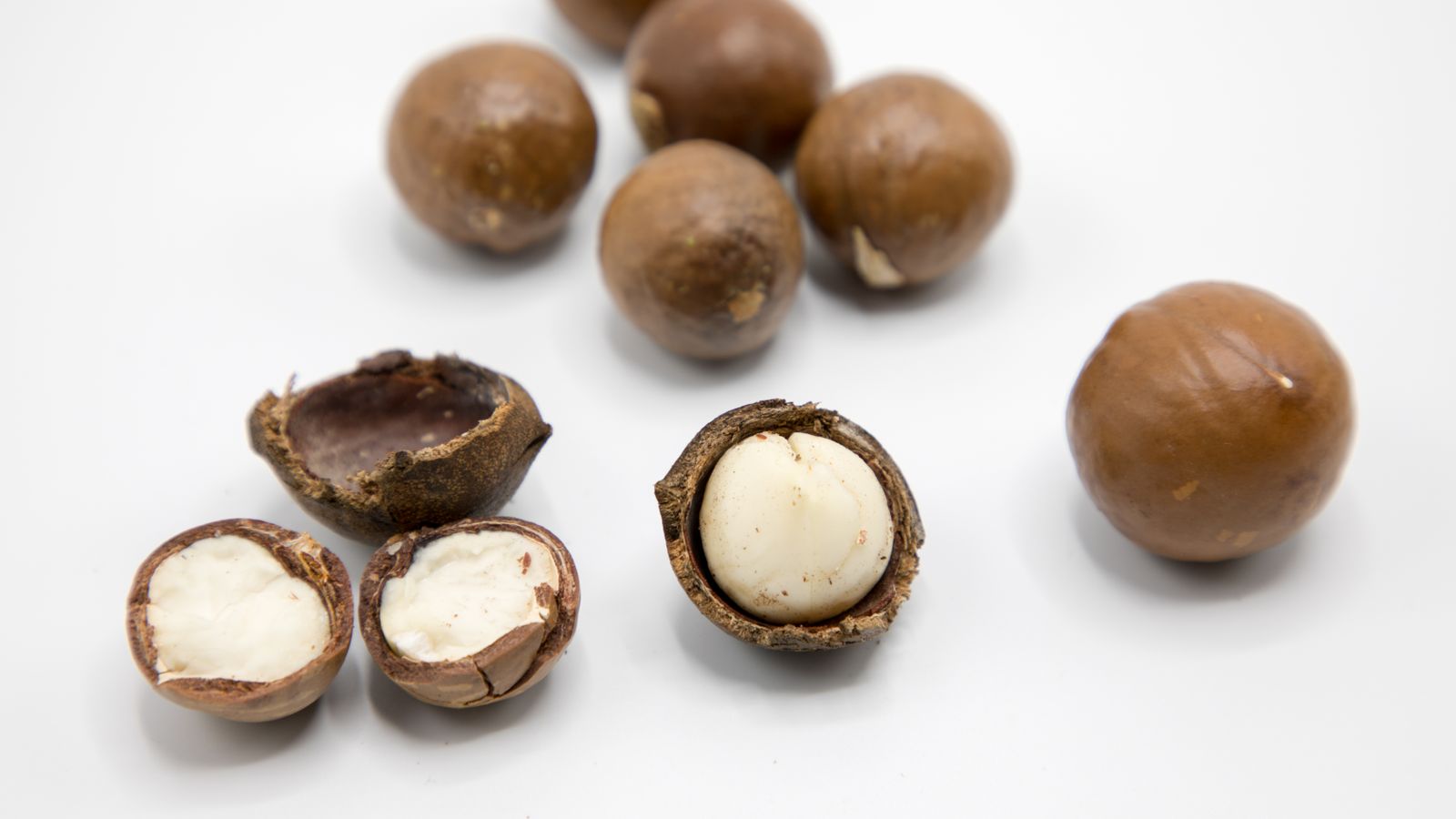
Macadamia nuts are one of the few foods that are specifically, acutely toxic to dogs — and, genuinely unusually for a well-known toxin, the exact mechanism behind it still isn't known. The Merck Veterinary Manual states plainly that "the mechanism of toxicity is not known," despite the effect itself being well documented: weakness (particularly in the back legs), vomiting, tremors, elevated body temperature, and ataxia, typically appearing within about 12 hours of ingestion. The reassuring part is that, unlike many toxic-food emergencies, macadamia nut toxicosis is usually mild and self-limiting, with most dogs recovering within 12–48 hours without specific treatment — though a vet should still be contacted, both to confirm the dog's history genuinely points to macadamia rather than something more serious, and because chocolate-covered macadamia nuts (a genuinely common gift-box combination, especially around Christmas in the UK) combine two separate toxins in one product.
Brazil Nuts, Chestnuts & Pine Nuts
These three round out the less commonly asked-about nuts. Brazil nuts aren't specifically toxic, but they're extremely calorie- and fat-dense and unusually high in selenium — a mineral a dog needs only in tiny amounts, and enough of it, sustained, can theoretically cause selenium toxicity — so they're best avoided as a regular treat. Chestnuts, when cooked, shelled, and plain, are relatively low in fat compared with true tree nuts and are one of the more tolerable options on this list in small amounts, though raw chestnuts are harder to digest and should be avoided. Pine nuts aren't toxic but are exceptionally high in fat for their size, making them a real pancreatitis-risk food in anything more than a token amount.
The Cross-Cutting Risk Most Guides Miss: Mould
Almost every general "can dogs eat nuts" guide treats each nut as an isolated toxin question and misses a risk that cuts across nearly the whole category: mould-contaminated nuts and legumes. The clearest illustration of just how serious this can be isn't really about dogs at all — it's the actual origin of aflatoxin science. Between 1960 and 1961, thousands of turkeys, ducklings, chickens, and pigs died across England in what was, at the time, a medical mystery dubbed "Turkey X disease." The cause, eventually traced and confirmed, was Aspergillus flavus mould growing on Brazilian peanut meal used in animal feed, producing a potent liver toxin now known as aflatoxin (Merck Veterinary Manual). It remains one of the founding case studies in mycotoxin science, and it started with contaminated nuts on English soil.
The same fungus, and the same toxin, can affect poorly stored peanuts (and, less commonly, other nuts and even mouldy bread) today. Aflatoxin metabolites bind to DNA and proteins in the liver, causing fatty change or outright liver-cell death, and mortality in confirmed cases is high. In practice, this means: never feed nuts that look discoloured, feel damp, or smell musty, don't feed nuts that have been sitting out in a garden or compost area (fallen or forgotten nuts are exactly where mould takes hold), and store any nuts you do offer your dog properly sealed and away from damp. This is a separate mould risk from the tremorgenic mycotoxins covered under walnuts and pecans above — different fungus, different toxin, different organ affected — but the underlying lesson is the same: a nut that's fine when fresh can become genuinely dangerous once mould has set in.
Salt, Flavourings & Nut Butters
Whatever nut you're considering, how it's prepared usually matters more than the nut itself. Salted and honey-roasted nuts add sodium and sugar a dog doesn't need, and large amounts of salt can, in extreme cases, cause salt toxicity. Flavoured nut mixes (barbecue, chilli, "bacon," wasabi) frequently contain onion or garlic powder, both toxic to dogs regardless of how small the listed quantity looks on the packet. Nut butters deserve a specific mention of their own: plain peanut butter can be a fine occasional treat, but a growing number of UK "no added sugar" peanut and nut butters are sweetened with xylitol instead — a sugar substitute that's genuinely lethal to dogs in small amounts. Always check the ingredients label of any nut butter before giving it to your dog; our guide to sorbitol vs xylitol explains exactly what to look for and why the two are often confused.
What to Do If Your Dog Eats a Dangerous Nut
- Identify the nut and rough quantity. This genuinely changes the urgency — a couple of plain cashews is a very different situation to a handful of walnuts or macadamia nuts.
- Call your vet or a pet poison helpline promptly if the nut involved is walnut, pecan, or macadamia, or if you're at all unsure what was eaten.
- Watch for tremors, seizures, unsteadiness, vomiting, weakness, or a raised temperature over the following 12–48 hours.
- Don't try to induce vomiting at home unless specifically told to by a vet — timing and method matter, and doing it incorrectly can cause additional harm.
- Keep any packaging so you (or your vet) can check for chocolate coatings, flavourings, or xylitol-containing nut butters mixed in.
Supporting Digestion If Your Dog Has Nuts Occasionally
For the safer nuts on this list — a plain cashew here, a small piece of chestnut there — the main everyday consideration is simply keeping portions small and your dog's digestion on an even keel generally. Our Probiotic Chews are built around a 3 billion CFU blend of five named live probiotic strains, colostrum, and organic turmeric, formulated for everyday digestive support.
Doggy Dailies Probiotic Chews
★★★★★ 5.0 (96 verified reviews)
A daily chew built around a targeted probiotic blend with named Lactobacillus and Lactococcus strains, colostrum, and organic turmeric, formulated for everyday digestive support.
What we love: easy daily routine, no hiding supplements in food, trusted by 100,000+ UK dog owners.
Best for: dogs who could use consistent, everyday gut support.
To be clear: probiotic support is a general digestive-wellbeing measure and is not a treatment for mycotoxin poisoning, macadamia toxicosis, or any acute reaction — those always need a vet, not a supplement.
FAQ
Which nuts are actually safe for dogs?
Plain, unsalted peanuts, cashews, and pistachios can be fed in small amounts. Almonds are low-toxicity but carry a choking and pancreatitis risk. Walnuts, pecans, and macadamia nuts should never be fed.
What happens if a dog eats macadamia nuts?
Weakness, vomiting, tremors, and a raised temperature, usually appearing within about 12 hours and resolving within 12-48 hours. The exact toxic mechanism is still unknown, but a vet should always be contacted.
Why are mouldy nuts dangerous even if the nut itself is safe?
Mould on nuts (particularly peanuts, walnuts, and pecans) can produce potent mycotoxins - aflatoxin, which damages the liver, or tremorgenic mycotoxins like penitrem A, which cause tremors and seizures. Never feed a nut that looks discoloured, feels damp, or smells musty.
Is peanut butter safe for dogs?
Plain peanut butter with no added ingredients is generally fine as an occasional treat, but always check the label - some "no added sugar" varieties use xylitol, which is highly toxic to dogs.
Are cashews and pistachios safe for dogs?
Plain, unsalted, shelled cashews and pistachios are generally safe in small amounts. Pistachio shells are a choking hazard, and both should be checked for mould before feeding.
How is walnut toxicity different from macadamia nut toxicity?
Walnut danger mainly comes from mould-produced tremorgenic mycotoxins on the shell and husk, a well-understood mechanism. Macadamia toxicity happens even with fresh nuts, and its exact mechanism remains unknown.
Sources
- Merck Veterinary Manual — Macadamia Nut Toxicosis in Dogs
- Merck Veterinary Manual — Aflatoxicosis in Animals
- UK Vet Companion Animal — Aflatoxicosis in Dogs
This article is for general information only and isn't a substitute for veterinary advice. If your dog has eaten walnuts, pecans, macadamia nuts, or any mouldy nuts, or is showing tremors, weakness, or vomiting, contact your vet promptly.
