

Posted by Jamie Sinclair
on September 17, 2026

Puppy teething runs from around 2 weeks old until roughly 6-7 months, and it explains a lot of what looks like sudden bad behaviour — the frantic chewing, the sore gums, the occasional blood-speckled toy. But there's a specific complication that most teething guides skip entirely, and it's one small and flat-faced breeds are genuinely more likely to run into. This guide covers the real teething timeline, what's normal, how to manage the nipping and chewing, and the one thing worth actually checking for once your puppy's adult teeth start coming through.
Written by Jamie Sinclair, who writes about canine health, nutrition, and everyday care for Doggy Dailies — focused on translating veterinary research and real ingredient science into practical, honest guidance UK dog owners can use.
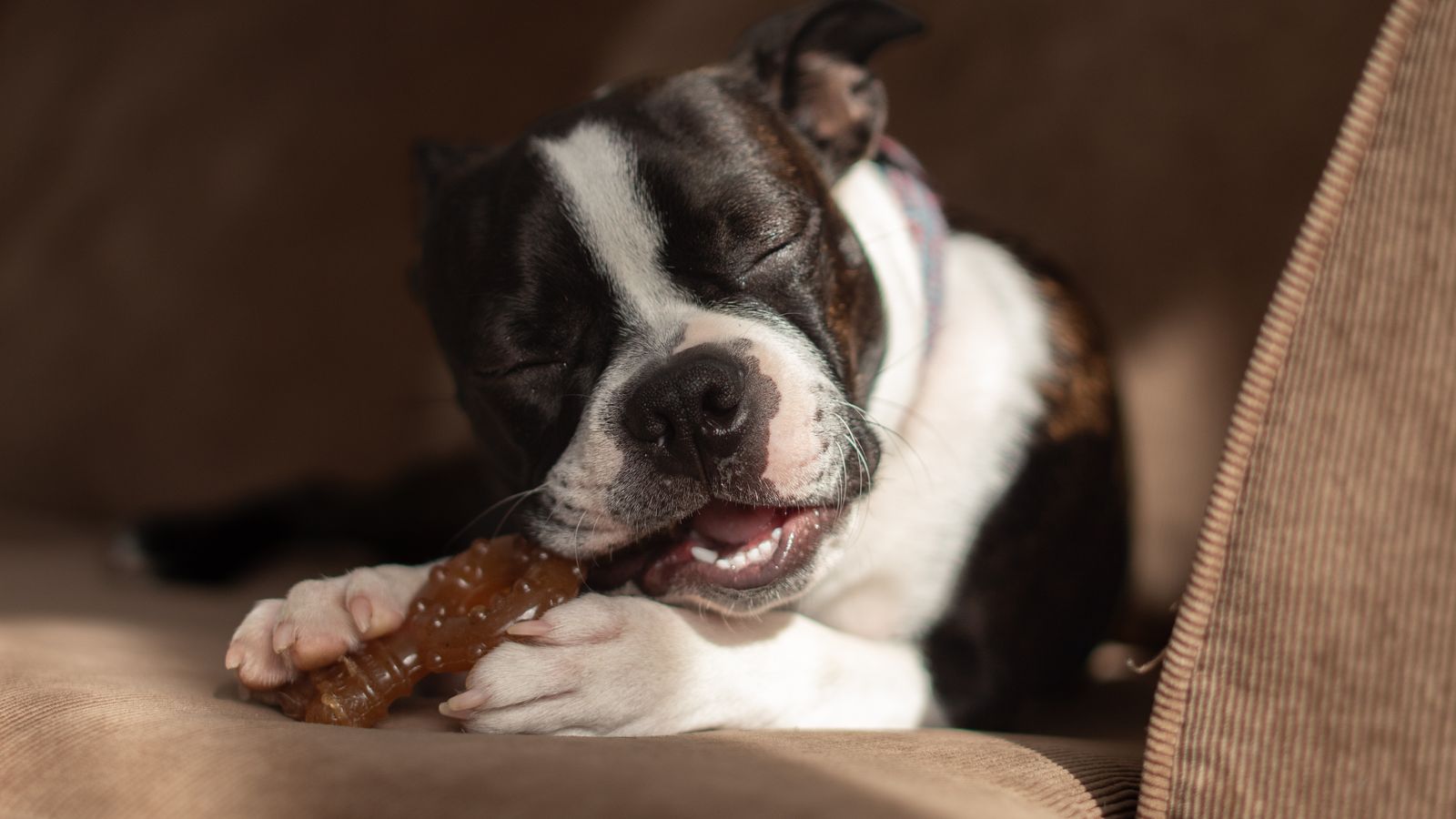
Table of Contents
- The Puppy Teething Timeline
- Signs Your Puppy Is Teething
- Retained Baby Teeth: The Complication Most Guides Miss
- Managing the Chewing and Nipping
- Choosing Safe Chew Toys
- Diet and Nutrition During Teething
- Building Good Dental Habits Early
- When to See a Vet
- FAQ
- Sources
The Puppy Teething Timeline
Puppies are born without teeth. Baby (deciduous) teeth start emerging from around 2-4 weeks old, and by 5-6 weeks a puppy typically has a full set of around 28 baby teeth.
Teething proper — where those baby teeth are pushed out by permanent adult teeth — usually starts around 12-16 weeks, when owners notice small, crumb- or rice-sized teeth appearing around the house or in bedding. By around 6 months, most dogs have lost all their baby teeth and grown in their full set of roughly 42 adult teeth.
There's real variation between dogs and breeds in exactly when this happens, so a puppy running a few weeks ahead or behind this timeline isn't automatically a concern.
Signs Your Puppy Is Teething
- Increased chewing on furniture, shoes, hands, and anything else within reach
- Excessive drooling
- Small spots of blood on toys or chews (from a loosening tooth, not usually a cause for concern on its own)
- Mild swelling or redness of the gums
- Occasional reduced interest in food, since chewing hard kibble can be uncomfortable
- A generally more irritable or restless mood, especially around the peak of adult teeth coming through
- Finding small baby teeth around the house — though many puppies simply swallow them while eating or chewing, which is harmless
Teething is genuinely painful for puppies, in the same way it is for human babies, and a lot of what looks like a behavioural regression during this period — more nipping, more destructive chewing — is really just a puppy trying to relieve sore gums with whatever's available.
Retained Baby Teeth: The Complication Most Guides Miss
This is the part worth actually paying attention to, because it's a genuine veterinary problem rather than just a normal teething symptom. A retained (or persistent) deciduous tooth is a baby tooth that's still in place after the permanent adult tooth has already erupted alongside it, because the baby tooth's root failed to resorb and let go on schedule.
It's significantly more common in small breeds and brachycephalic (flat-faced) breeds — Chihuahuas, Yorkshire Terriers, Pomeranians, Pugs, French and English Bulldogs, and similar breeds — and tends to run in family lines, suggesting a genetic component.
The reason it matters: two teeth crowded into the space meant for one traps food and debris, which accelerates tartar buildup, gum disease, and decay, and the crowding itself can damage enamel through friction. If a retained lower canine pushes the adult canine inward, it can grow toward the roof of the mouth, which is painful and can interfere with normal eating.
Left long enough, retained teeth can also disrupt how the jaw develops.
The fix is straightforward when caught in time — extraction of the retained baby tooth, often timed alongside a spay or neuter to avoid a second anaesthetic. Vets generally recommend checking a puppy's mouth around the time adult teeth should be coming in (roughly 4-7 months) specifically to catch this early, since the earlier a retained tooth is removed, the more likely the adult tooth is to settle into a normal position on its own.
Left untreated, misalignment is far less likely to self-correct and can end up needing orthodontic treatment later. If you own one of the higher-risk breeds above, it's worth specifically asking your vet to check for this at your puppy's routine appointments during the teething window, rather than assuming it would be obvious from the outside.
That elevated risk in small breeds isn't just received wisdom — it's been measured. A 2024 study in Research in Veterinary Science looked at nearly 3 million pure-bred, client-owned dogs seen at veterinary hospitals across the United States over five years and found persistent deciduous teeth in around 7% of dogs overall.
Extra-small breeds weighing less than 6.5kg — Chihuahua, Yorkshire Terrier and Pomeranian territory — had a prevalence of 15%, more than double the general rate, and the gap was statistically significant (P < 0.001). The same study found that dogs who hadn't had a dental check or cleaning in two years or more were significantly more likely to have a retained tooth picked up at all, with the odds of detection roughly 2.7 to 3.4 times higher than for dogs on a regular dental schedule.
In other words, small breeds aren't just more prone to retained teeth — they're also more likely to have one go unnoticed if nobody's specifically looking. That's the practical case for asking your vet to check your puppy's mouth during the teething window rather than waiting for a problem to become obvious on its own.
Managing the Chewing and Nipping
Redirecting rather than punishing is the most effective approach during teething — a puppy chewing on your hand or the sofa isn't being naughty, they're trying to relieve genuine discomfort. Keep appropriate chew toys within easy reach in every room your puppy spends time in, and swap in a toy the moment they start on something inappropriate rather than after the fact.
A firm "no" followed immediately by offering an acceptable alternative, repeated consistently, teaches the distinction far more effectively than scolding alone. Puppy-proofing — moving shoes, cables, and chewable valuables out of reach during this stage — saves a lot of frustration on both sides, since expecting a teething puppy to simply leave tempting objects alone isn't realistic.
Choosing Safe Chew Toys
Look for toys specifically designed for teething puppies — soft enough to be comfortable on sore gums but durable enough to hold up to frequent chewing. A mix of textures genuinely helps, since some puppies favour softer toys and others prefer something firmer to chew against.
A clean, slightly damp washcloth, twisted and frozen, is a low-cost option some puppies find particularly soothing, as the cold helps numb sore gums. Avoid anything hard enough to risk fracturing a tooth — bones, antlers, and very hard nylon chews are a genuine cause of fractured teeth in teething puppies, whose adult teeth aren't yet at full strength.
If a toy is splintering, losing pieces, or small enough to be a choking risk, it's time to replace it.
Diet and Nutrition During Teething
Some puppies go slightly off their food during peak teething discomfort, since chewing on hard kibble can be uncomfortable with sore gums — softening kibble with a little warm water for a few days is a simple, temporary fix that most puppies respond well to. Good nutrition matters more broadly during this period too, since a puppy is building both their permanent teeth and their skeleton at the same time; our guide to what your puppy actually needs nutritionally covers what genuinely supports healthy growth during this stage, as opposed to what's commonly assumed to help but doesn't.
Building Good Dental Habits Early
Teething is also a genuinely useful window for getting a puppy comfortable with having their mouth handled, since this gets much harder to introduce for the first time on an adult dog who's never had it done. Gently lifting the lips and touching the gums and teeth for a few seconds at a time, paired with praise or a small treat, builds tolerance gradually.
Once the adult teeth are fully in, a soft finger brush or puppy-specific toothbrush with dog-safe toothpaste (never human toothpaste, which can contain xylitol and other ingredients that are toxic to dogs) can be introduced the same gentle way. Starting this early, rather than waiting until adulthood, makes ongoing dental care — which matters for long-term health, not just fresh breath — far easier to maintain for the rest of the dog's life.
When to See a Vet
- A baby tooth still present once the adult tooth beside it has clearly come through — the retained-tooth pattern covered above
- Persistent bleeding from the gums, rather than the occasional small spot
- Visible swelling, a bad smell from the mouth, or reluctance to eat that lasts more than a day or two
- A tooth that looks chipped, cracked, or discoloured
- Any sign your puppy is in significant, ongoing pain rather than mild teething discomfort
- No teething activity at all by around 8-9 months, which is worth a check even though it's uncommon
FAQ
How long does puppy teething last?
Baby teeth start emerging from around 2-4 weeks old, and teething proper — losing baby teeth for adult teeth — typically runs from around 12 weeks until 6-7 months, when most dogs have their full adult set.
Is it normal for a puppy's gums to bleed a little while teething?
A small amount of blood on a toy or chew from a loosening tooth is normal. Persistent bleeding, swelling, or a bad smell from the mouth is not, and warrants a vet check.
What are retained baby teeth in dogs?
A retained deciduous tooth is a baby tooth still present after the adult tooth beside it has already erupted. It's more common in small and flat-faced breeds and usually needs extraction to prevent crowding, gum disease, and misalignment.
Is it safe for my puppy to swallow a baby tooth?
Yes. Puppies commonly swallow baby teeth while eating or chewing, and this is generally harmless.
What chew toys are safest for a teething puppy?
Toys designed specifically for teething puppies — soft enough for sore gums but durable enough for frequent chewing. Avoid very hard items like bones, antlers, or hard nylon chews, which can fracture a puppy's developing teeth.
Sources
- American Kennel Club — Puppy Teething Timeline
- PetMD — Puppy Teething: Timeline, Signs, and Care Tips
- Seven Oaks Pet Hospital — Retained Deciduous Teeth in Dogs
- Wallis C, Ivanova A, Holcombe LJ (2024) — Persistent deciduous teeth: Association of prevalence with breed, breed size and body weight in pure-bred client-owned dogs in the United States, Research in Veterinary Science
Related: More Puppy Guides
- Do Puppies Need Vitamins? What Your New Puppy Actually Needs
- Calming Treats for Puppies: A First-Time Owner's Guide
This article is for general information only and isn't a substitute for veterinary advice. If you're concerned about your puppy's teething, teeth, or gums, please contact your vet.
